
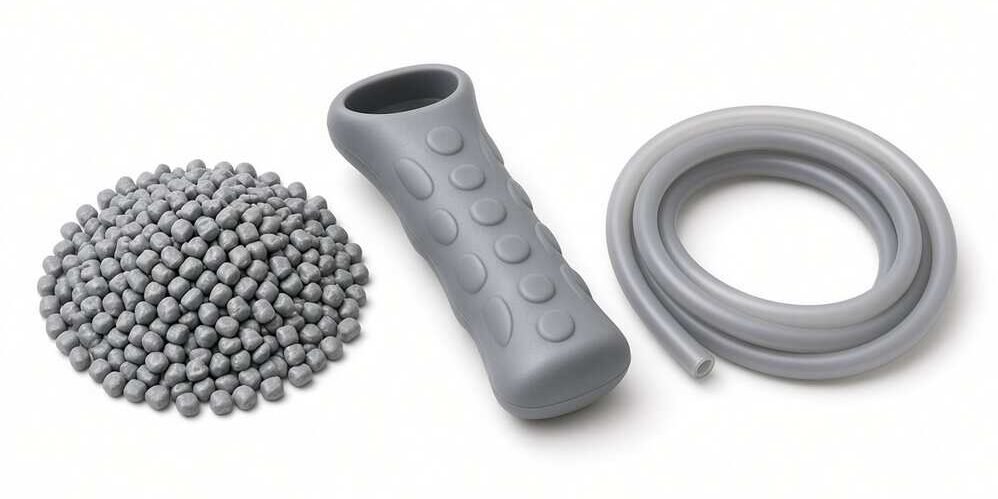
Thermoplastic Elastomers: A Quick Definition
A thermoplastic elastomer (TPE) is a polymer that shows both thermoplastic and elastomeric properties. Unlike traditional vulcanized rubber, which forms permanent cross-links during curing, TPEs use physical cross-links (such as hard and soft segments in a block copolymer). These physical bonds break when heated, allowing the material to flow and be reshaped, then reform when cooled.
The result is a material that can be injection-molded or extruded like plastic, yet stretches and recovers like rubber. Most TPEs are recyclable because they can be remelted without chemical degradation of the primary structure.
Advantages and Disadvantages
Advantages
- Processable on standard thermoplastic equipment (injection molding, extrusion).
- Recyclable scrap and end-of-life parts can be reprocessed.
- Shorter cycle times than thermoset rubber because no curing step is required.
- Wide hardness range, typically from Shore 00 (very soft) to Shore D (semi-rigid).
- Good flexibility and elasticity at room temperature.
- Many grades offer low-temperature flexibility and chemical resistance.
Disadvantages
- Higher cost than commodity plastics or basic rubber in some grades.
- Limited high-temperature performance compared with vulcanized rubber or silicone.
- Compression set can be higher than thermoset elastomers under prolonged load.
- Some types show poorer chemical resistance or weatherability unless specifically formulated.
- Surface tackiness in very soft grades can complicate handling and assembly.
Types of Thermoplastic Elastomers
TPEs are grouped by chemistry. Each family has distinct performance trade-offs.
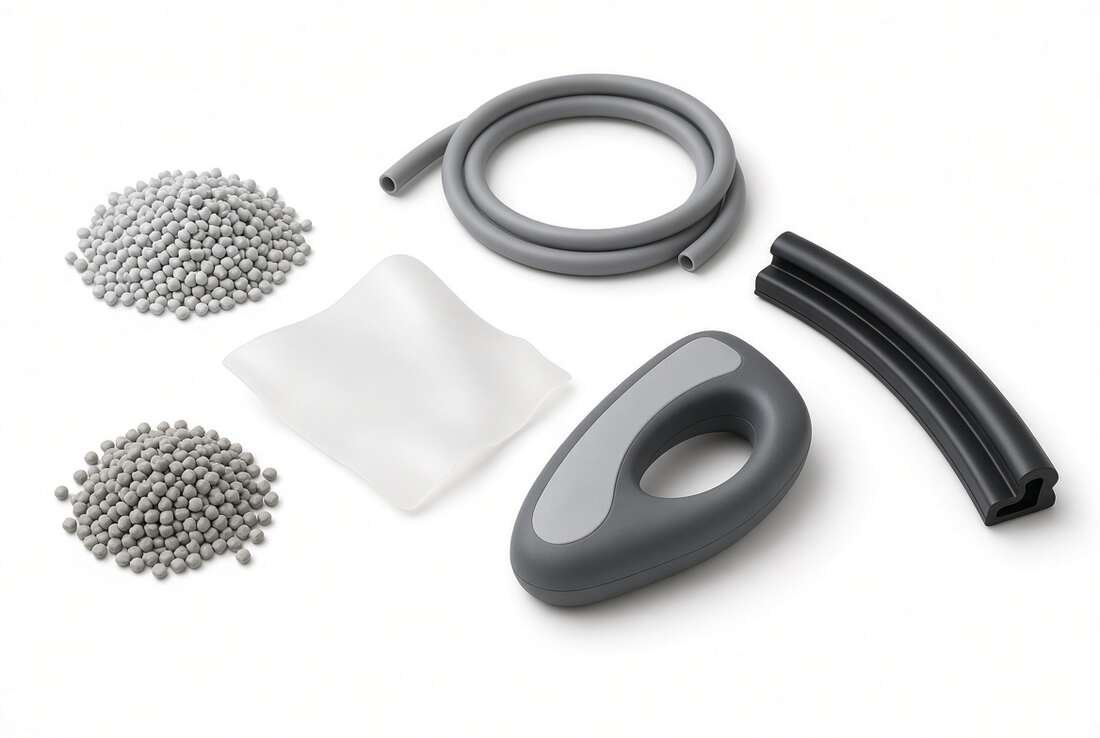
Styrenic Block Copolymers (SBC / TPE-S / TPS)
These are the most common TPEs. They consist of polystyrene hard blocks and polybutadiene or polyisoprene soft blocks (examples: SBS, SEBS). SEBS grades are hydrogenated for better heat and weather resistance. SBCs offer a broad hardness range, good clarity in some grades, and relatively low cost. They are widely used for soft grips, seals, and overmolding.
Thermoplastic Polyolefin Elastomers (TPO / TPE-O)
TPOs blend polypropylene with an elastomer (often EPDM). They provide good toughness, chemical resistance, and weatherability at moderate cost. Hardness is usually higher than SBCs. Common uses include automotive exterior parts, cable insulation, and impact-modified components.
Thermoplastic Polyurethanes (TPU / TPE-U)
TPUs combine polyester or polyether soft segments with urethane hard segments. They deliver high abrasion resistance, good oil and fuel resistance, and strong mechanical properties. Hardness spans a wide range. Drawbacks include higher cost and sensitivity to moisture during processing. TPUs appear in medical tubing, phone cases, wheels, and industrial seals.
Thermoplastic Copolyester (TPC / TPE-E)
Also called COPE or TPE-E, these materials use polyester hard segments and polyether soft segments. They offer high strength, good heat resistance, and excellent flex fatigue life. They are stiffer than most other TPEs at equivalent hardness. Applications include automotive boots, industrial hoses, and some medical devices.
Thermoplastic Polyamides (COPA / PEBA / TPE-A / TPA)
These block copolymers use polyamide hard segments and polyether soft segments (PEBA is the best-known trade name family). They provide high elasticity, good low-temperature flexibility, and chemical resistance. They are often chosen when both softness and strength are required, such as in sports equipment, catheters, and breathable films.
Thermoplastic Vulcanizates (TPV / TPE-V)
TPVs contain dynamically vulcanized rubber particles (usually EPDM) dispersed in a thermoplastic matrix (usually polypropylene). They combine rubber-like elasticity and compression-set performance with thermoplastic processability. TPVs are common in automotive seals, weatherstripping, and under-hood components.
Other Types (Soft-PVC, Acrylic, Bio-based TPEs)
Soft PVC is sometimes grouped with TPEs because of its flexibility, though it is not a true elastomer. Acrylic-based TPEs and bio-based grades (derived from renewable feedstocks) exist for specialized needs such as clarity, skin contact, or sustainability targets. Performance varies widely by formulation.
Properties of Thermoplastic Elastomers
Hardness
Hardness is measured on the Shore scale. Very soft TPEs fall in the Shore 00 or A range (below 50A). Mid-range materials sit between 50A and 90A. Harder grades reach Shore D. Hardness affects feel, flexibility, and load-bearing capacity. Softer grades are chosen for grips and seals; harder grades suit structural or semi-rigid parts.
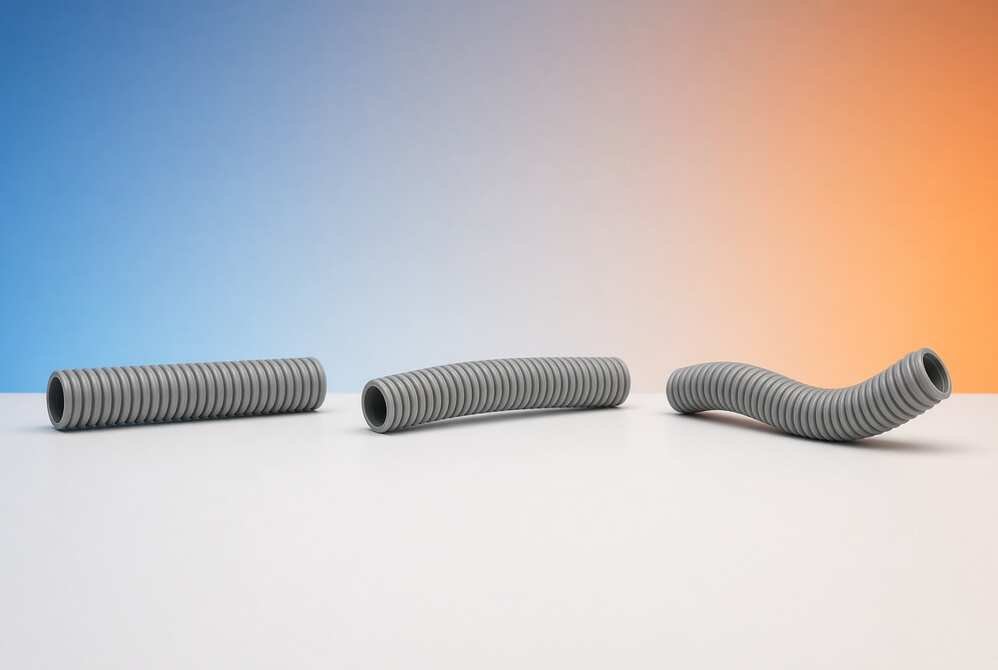
Temperature Resistance
Most TPEs perform well between –40 °C and 100–120 °C. Above the upper limit, they soften and lose strength. Special grades (certain TPUs, TPCs, and TPVs) extend the upper range. Low-temperature flexibility is generally good, especially in SEBS and PEBA types.
Tensile Properties
Tensile strength and elongation at break vary by family. TPUs and TPCs typically show higher tensile strength. SBCs and TPOs are more moderate. Elongation can exceed 500 % in soft grades. These values determine how much the material can stretch before permanent damage.
Compression Set
Compression set measures how well a material returns to its original thickness after prolonged compression. Lower values are better for seals. TPVs and some TPUs perform well; very soft SBCs often show higher set. Formulation and test conditions (temperature, time, compression amount) strongly influence results.
Shrinkage
TPEs shrink as they cool in the mold. Shrinkage rates are generally higher than rigid plastics and must be accounted for in tool design. Softer grades and certain chemistries (such as some TPUs) tend to shrink more. Consistent processing conditions help control dimensional variation.
Safety
Many TPE grades are formulated for skin contact or medical use. Safety depends on the specific polymer, additives, and residual monomers. Properly compounded medical-grade TPEs can meet biocompatibility standards. Always verify the grade against the intended use rather than assuming all TPEs are equivalent.
TPE Processing Methods
Injection Molding
Injection molding is the most common process. TPEs flow at elevated temperature and solidify quickly, enabling short cycle times. Overmolding onto rigid substrates (polypropylene, ABS, polycarbonate) is routine with compatible grades. Moisture-sensitive types (especially TPU) require drying before molding.
Extrusion
Extrusion produces continuous profiles, tubing, films, and wire coatings. TPEs extrude cleanly and can be co-extruded with other thermoplastics. Die design and cooling rate affect surface finish and dimensional stability.
Other Processing Methods
Blow molding, thermoforming, and 3D printing (filament or pellet-based) are possible with selected grades. 3D printing of soft TPE is growing but still limited by printability and layer adhesion compared with rigid filaments.
Applications
TPEs appear wherever a soft, flexible, or elastic thermoplastic is needed: soft-touch grips, seals and gaskets, cable jackets, automotive weatherstrips, footwear components, and consumer product overmolds.
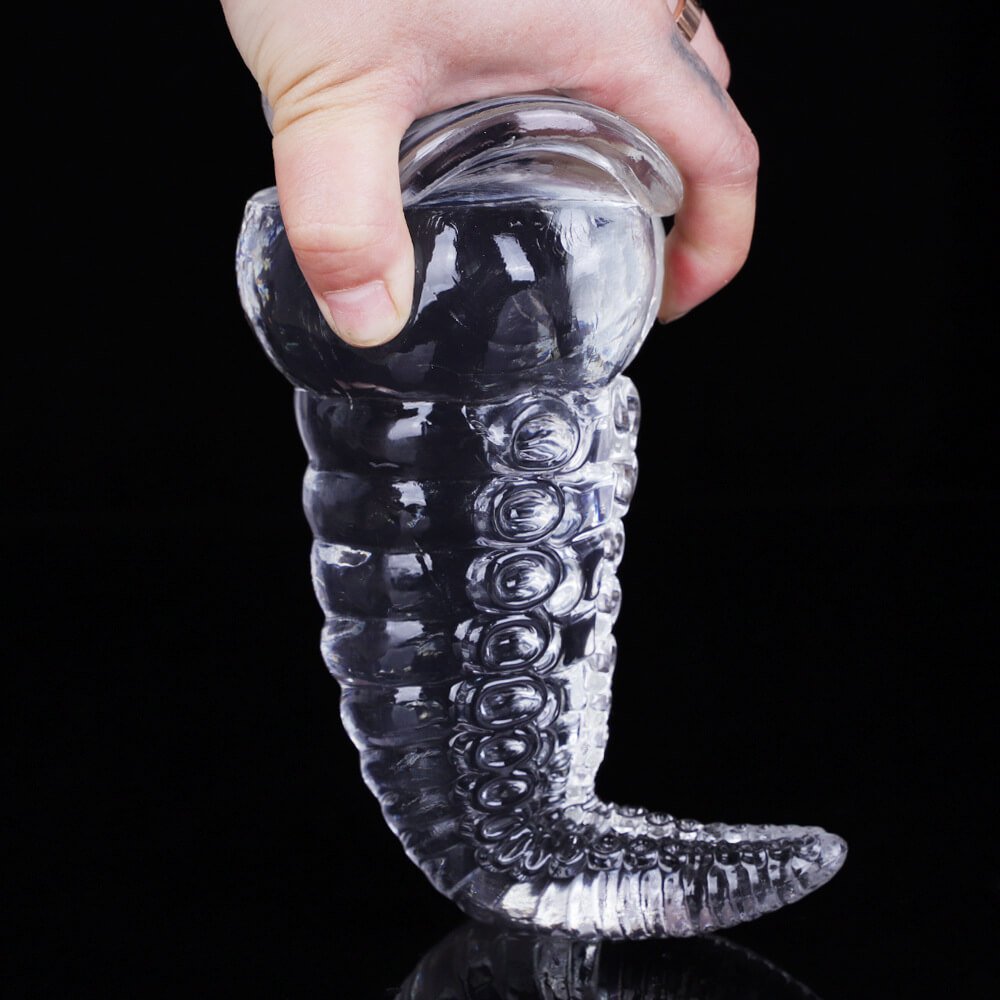
In the adult product sector, softer TPE grades are widely used for realistic textures, flexible shafts, and cost-sensitive designs where liquid silicone is not required. Manufacturers often choose TPE when they need good softness at a lower material cost, while still meeting basic body-safety requirements for external use.
TPEs for Medical Applications
Medical uses include tubing, catheters, seals, syringe stoppers, and wearable device components. Grades are selected for biocompatibility, sterilizability (ethylene oxide, gamma, or autoclave in some cases), and low extractables. PEBA, certain TPUs, and medical SEBS are common. Regulatory documentation and lot traceability are standard requirements.
Regulation and Safety
EU Directive
In the European Union, materials intended for medical devices must comply with the Medical Device Regulation (MDR). For food-contact applications, relevant framework regulations and specific migration limits apply. TPE suppliers typically provide declarations of compliance for the intended use.
ISO 10993
ISO 10993 is the primary series of standards for biological evaluation of medical devices. Relevant parts include cytotoxicity, sensitization, irritation, and systemic toxicity. A TPE grade marketed for medical use should have supporting ISO 10993 data for the intended contact type and duration.
ASTM Tests
ASTM standards cover mechanical properties (tensile, tear, compression set), hardness, and specific performance tests. Common references include ASTM D412 (tensile), ASTM D395 (compression set), and ASTM D2240 (hardness). These tests allow comparison across grades and suppliers.
TPE in Comparison to Other Materials
Is TPE better than silicone?
Neither is universally better. Silicone offers superior high-temperature resistance, lower compression set in many grades, and excellent biocompatibility and clarity. TPE is generally easier and faster to process, lower in cost for many applications, and recyclable. Choose silicone when heat, long-term sealing, or optical clarity is critical. Choose TPE when process speed, recyclability, or overmolding onto thermoplastics matters more.
Can TPE be recycled?
Yes. Because TPEs melt and resolidify, production scrap and many end-of-life parts can be reground and reprocessed. Recyclability is highest when the part is made from a single TPE family and free of incompatible contaminants. Mixed or heavily filled grades are harder to recycle into high-value applications.
FAQ
A:Both can be made safe for skin and medical use. Safety depends on the specific grade and its test data (such as ISO 10993), not the material family alone. Medical-grade silicone has a longer track record for implants; medical-grade TPE is widely used for tubing, seals, and external devices.
A:Thermoplastic elastomer.
A:Many grades are formulated and tested for prolonged skin contact. Always check the specific grade’s biocompatibility data for your application.
A:A medical-grade thermoplastic elastomer used in devices such as tubing, catheters, seals, and soft interfaces on wearables. These grades come with biocompatibility and sterilization documentation.
A:Soft grips, seals, gaskets, tubing, cable jackets, automotive weatherstripping, overmolded consumer parts, and medical components. The exact grade is selected by hardness, temperature range, and regulatory needs
We work with both TPE and liquid silicone for custom and private-label adult products. If you are evaluating materials for a specific design, we can provide samples and processing notes based on the hardness and performance you need.