

You want to start an adult toy brand in a fast-growing sexual wellness market — whether DTC or on Shopify. One concern keeps surfacing for startup founders: what if the samples you approve don’t match the products that arrive in mass production?
This worry is especially common when you’re new to working with manufacturers, molds, and material batches. High MOQs can tie up precious cash, inventory risk feels overwhelming, and the thought of wasting your limited budget on a prototype that fails at scale is frustrating.
Many new adult toy brands face these exact challenges. The good news? Most of them are avoidable with the right approach.
This guide breaks down why consistency between sample and production matters, the most common pitfalls small teams encounter with sex toy manufacturers, and practical strategies to keep every batch aligned with your approved sample. You’ll find clear, actionable next steps at the end — designed specifically for startup brands like yours.
Why Sample Consistency is Crucial
Importance of Quality Assurance in Mass Production
Quality assurance protects the experience you promise customers. When your approved sample sets the exact standard for feel, vibration strength, color, and finish, every unit that ships meets that standard.
Consistent products lower return rates and protect your profit margins. They also free your small team to focus on marketing and growth instead of handling complaints. For a new DTC sex toy brand, the first orders often decide whether you build momentum or lose it to refunds and negative reviews.
Factories that control the full process from design to final inspection make consistency easier. They track material batches and production settings so the same conditions used for your sample apply to larger runs.
The Impact of Inconsistent Products on Brand Reputation
One mismatched batch can damage more than a single order. It hurts the trust you are working hard to build.
Imagine customers receive a vibrator that feels weaker than the sample or a silicone toy with a slightly different softness. They leave reviews that say the product does not match the photos or description. Those reviews affect future sales and raise your advertising costs because conversion drops.
In the sexual wellness space, word spreads quickly in communities and on social platforms. Small brands recover slowly from early reputation hits. Consistent quality from the start lets you collect positive reviews and grow steadily instead of fighting damage control.
Common Mistakes in Sample Creation and Mass Production

Designing Without a Prototype
Many new adult toy brands start with detailed 3D renders or sketches and move straight to bulk production. They skip the physical prototype stage.
This shortcut creates expensive problems later. You miss how the product actually feels in hand, how buttons sit under real fingers, or how different shore hardness affects comfort. Changes after tooling costs far more time and money than an early physical sample.
A rapid prototype process lets you hold the product, test ergonomics, and refine details before you commit to molds. You catch issues while they remain inexpensive to fix.
Not Requesting Sample Runs
Some founders approve one sample and immediately place a large order. They never see how the factory performs when making multiple units under real conditions.
A small pre-production run reveals variations in color, weight, or function before they affect hundreds of customers. Requesting this step costs little compared with the risk of a full run that misses the mark.
Experienced partners who work with adult toy startup teams often support flexible options so you can validate before scaling.
Overlooking Key Details and Specifications
Founders sometimes focus on the creative vision and give less attention to exact specifications. They skip detailed notes on shore hardness, color matching under standard lighting, packaging materials, or instruction wording.
Factories then make reasonable assumptions that may differ from your vision. The result shows up as products that look close but do not feel or perform exactly as expected.
Create a clear spec sheet with measurements, photos, videos, and material requirements. Update it every time you approve a change. Treat this document as the single source of truth.
Failing to Account for Changes in the Production Process
Production environments change. Silicone batches vary slightly. Workers rotate. Machines receive maintenance. Temperature or humidity shifts affect curing times.
If you do not lock the process around your approved sample, small drifts appear. A toy that felt perfect in the sample may arrive firmer, softer, or with weaker vibration later.
You prevent this by requiring the factory to document and replicate the exact conditions used for your sample. Regular checks against the reference sample catch deviations early.
Quality Control Strategies to Ensure Sample Matching
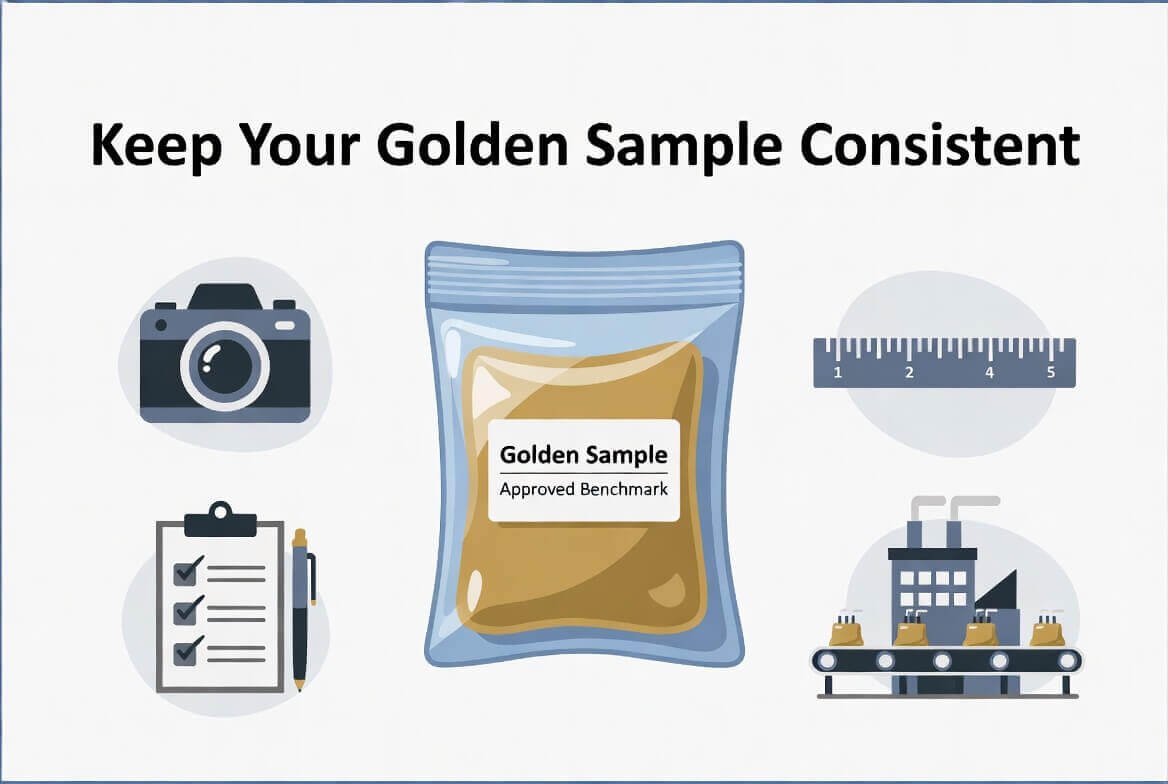
How to Keep Your Golden Sample Matching Every Batch
The golden sample serves as your physical benchmark. It represents the exact product customers should receive.
Treat it seriously. Seal one copy and keep it safe. Share high-resolution photos and videos from every angle. Record key measurements and note exact material grades.
Require the factory to reference this sample during every production stage. Conduct inspections at multiple points. When deviations appear, stop and correct them immediately. This discipline keeps every unit aligned with what you approved.
Implementing Effective Pre-Shipment Tests to Catch Common Defects
Pre-shipment inspection gives you the final safety net. Use a structured plan rather than random checks.
Typical tests for adult toys include visual and tactile comparison against the golden sample, dimensional checks, functional testing of all features, and safety checks for sharp edges or waterproof integrity.
Sample a statistically valid portion of the order. Document results with photos and notes. Only release the shipment when everything matches the approved standard. These pre-shipment inspection adult toys steps catch most issues before products leave the factory.
Devising QC Checks to Prevent Changes in Vibration Strength
Vibration consistency matters enormously to customers. A toy that feels strong in the sample but weak in bulk orders creates immediate disappointment.
Standardize your test conditions. Use fully charged batteries and controlled environments. Measure output where possible or create a repeatable protocol with clear pass/fail criteria.
Source motors from approved suppliers and verify each batch meets performance specs. Check that control boards have not changed between sample and production. These steps keep the experience identical across every unit.
Strategies to Avoid Firmware Issues in Smart Sex Toys
Connected pleasure devices add complexity. Firmware issues smart sex toys can cause connectivity failures, unexpected behavior, or safety concerns.
Work with manufacturers experienced in connected devices. Require version-controlled firmware and thorough testing across multiple phone models and operating systems. Test edge cases such as low battery, interrupted connections, and over-the-air updates.
Include clear error handling and safety limits. Lock the firmware version for the initial production run and document any future updates carefully.

Ensuring Material Safety and Compliance
Verifying Body-Safe Silicone from Factories
Body-safe silicone is the foundation of customer trust. To verify it, request Material Safety Data Sheets (MSDS) and Certificates of Analysis from the silicone supplier.
Ask for third-party lab reports confirming platinum-cured silicone free from restricted phthalates. Work only with factories that provide full batch traceability, so you can identify exactly which material lot was used in production. This documentation protects you in case of future inquiries and demonstrates due diligence to your customers.
Designing for Global Compliance from the First Prototype
Addressing compliance late in the process leads to expensive reformulations and shipment rejections. Start by identifying your target markets and selecting materials that meet the strictest standards among them.
Document every substance used from the beginning. Plan labeling and safety instructions early, including any required warnings. Designing with compliance in mind from the prototype stage helps you avoid costly changes later. A reliable sex toy manufacturer for startups can guide you on key regional requirements without requiring you to become a compliance expert yourself.
Certifications and Safety Marks for Adult Toys
Unlike children’s toys, adult toys do not have one universal mandatory safety certification.
In the United States, the Consumer Product Safety Commission (CPSC) regulates general consumer products. Adult toys are often classified as novelty items, but manufacturers must still ensure they present no unreasonable risks. Some states also enforce Proposition 65, which may require specific testing or warnings.
In the European Union, REACH regulations and general product safety rules apply. Rather than chasing a single certification that may not exist, focus on maintaining documented material safety data and clear, honest labeling.
Trend: Leveraging Technology in Sample Quality Assurance
Golden Sample QA for Connected Pleasure Devices
Technology now helps lock in consistency even for complex products. Digital records, 3D scans, and detailed measurement files travel with the golden sample. Factories and brands reference the same data set.
Some teams add AI-assisted visual inspection during production to flag deviations faster than human eyes alone. Cloud-shared spec systems reduce miscommunication between your small team and the production floor.
Body-safe Silicone Traceability and Lab Testing
Traceability has moved beyond paper certificates. Forward-thinking factories link silicone batches to digital records that include lab test results. You can request the exact test data for the material used in your order.
Integrated lab partnerships allow faster verification of new colors or formulations. When you scale or introduce variations, you already know the material foundation remains body-safe and consistent.
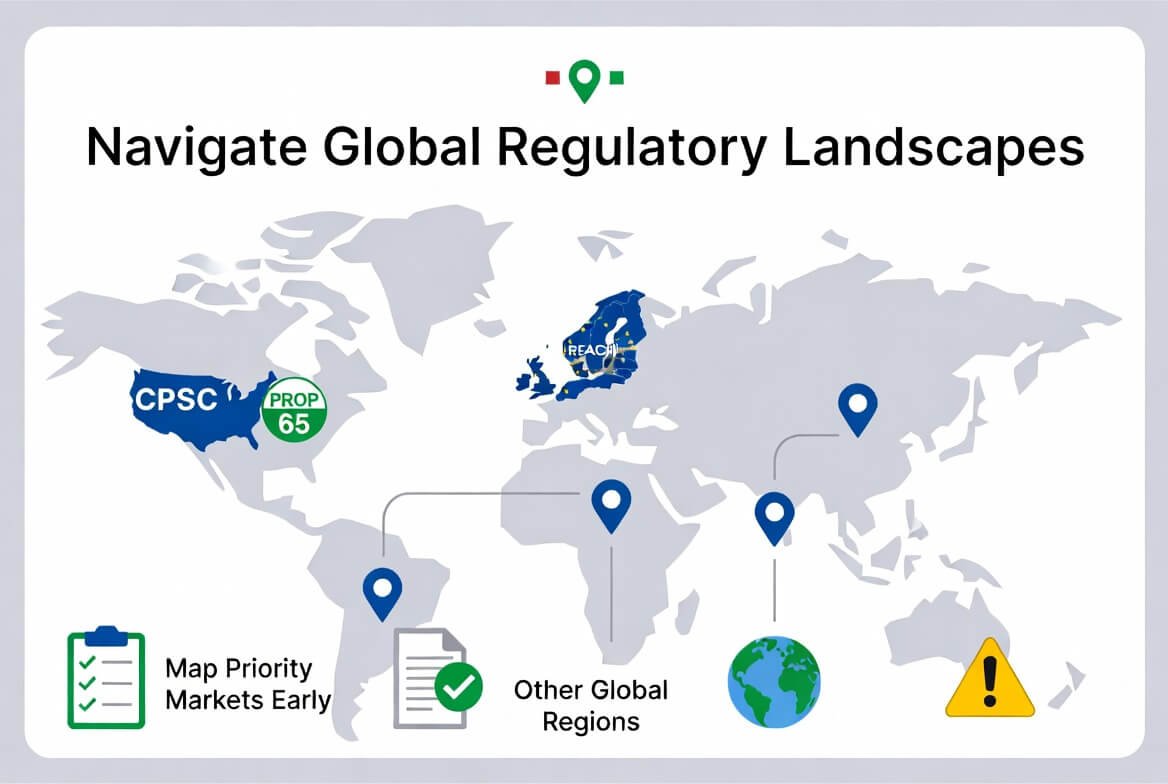
Trend: Navigating Global Regulatory Landscapes
Identifying Regional Safety Regulations
Regulations differ by market and continue to evolve. The United States emphasizes CPSC oversight and state-level rules such as Prop 65. The European Union applies REACH restrictions and expanding general product safety rules. Other regions add their own chemical, labeling, or electrical safety expectations.
Map your priority markets early. Identify the highest common requirements and design to meet them. This approach prevents discovering late that a material or component fails in one of your target countries.
Adapting Designs for International Compliance
Smart founders build flexibility into early designs. They select materials already proven compliant across major markets. They create modular packaging and instructions that accommodate different languages and warning styles.
They also maintain open communication with their manufacturer about upcoming regulatory shifts. When rules tighten, they adjust before production rather than after. This proactive stance keeps launches on schedule.
FAQ
A:Request Material Safety Data Sheets (MSDS) and Certificates of Analysis from the silicone supplier. Ask for third-party lab reports confirming platinum-cured silicone is free from restricted phthalates.
Require batch traceability so you can identify exactly which material lot was used. Test samples yourself for odor, texture, and durability. Work only with manufacturers who provide strong documentation and are transparent about their processes.
A:Compare production samples against your approved golden sample on these key points:
Appearance and surface quality
Dimensions and tolerances
Functionality and vibration performance
Safety features (e.g., waterproofing, material safety)
Packaging and labeling
Use a clear sampling plan (e.g., AQL standard). Combine objective measurements with real-use testing. Always photograph and document results for your record
A:Choose a manufacturer experienced in connected devices. Require version-controlled firmware with full documentation.
Conduct thorough cross-device and edge-case testing before mass production. Lock in the approved firmware version and treat any future updates with the same strict process as hardware changes.
A:The Consumer Product Safety Commission (CPSC) oversees adult toys sold as novelty items. There are no adult-toy-specific federal standards, but the CPSC enforces general safety requirements and requires companies to report substantial product hazards. Some states add extra rules such as Proposition 65
A:Adult toys do not have one mandatory universal safety mark like children’s toys.
Focus on material safety testing, chemical compliance (REACH in Europe, Prop 65 in California where applicable), and accurate labeling. Many brands obtain voluntary third-party lab reports to prove body safety. Prioritize documented evidence over chasing any single certification mark.
Take the Next Step with Confidence
You now have a clear roadmap to avoid the most common production pitfalls — from sample drift to material safety and compliance. These challenges are manageable when you partner with a manufacturer who understands the realities of launching an adult toy brand.
Successful DTC and Shopify brands address these issues early: they lock in a golden sample, implement proper quality checks, and work with partners offering low MOQ and transparent guidance.
If you’re ready to move from idea to reliable production, reach out to discuss your product and goals. Many founders start with a simple conversation and their first prototype.
Your vision deserves products that consistently match your standards. Let’s build that reliability together.