
Introduction
Understanding the adult product market in 2026
The adult product market is becoming more specialized. Instead of competing only on product type or price, new brands are increasingly finding opportunities by serving specific audiences, solving overlooked problems, and creating products that feel more relevant to their customers.
This is particularly interesting for adult content creators and KOLs.
A creator may already have something that traditional product companies spend years trying to build: a highly engaged audience. Through comments, DMs, reviews, livestreams, and everyday conversations, creators often know which products their audience likes, which ones they avoid, and what they wish existed.
That makes audience feedback a potentially valuable starting point for product development.
However, having an audience does not automatically make an idea worth manufacturing. A product still needs to be useful, differentiated, safe, commercially viable, and technically realistic.
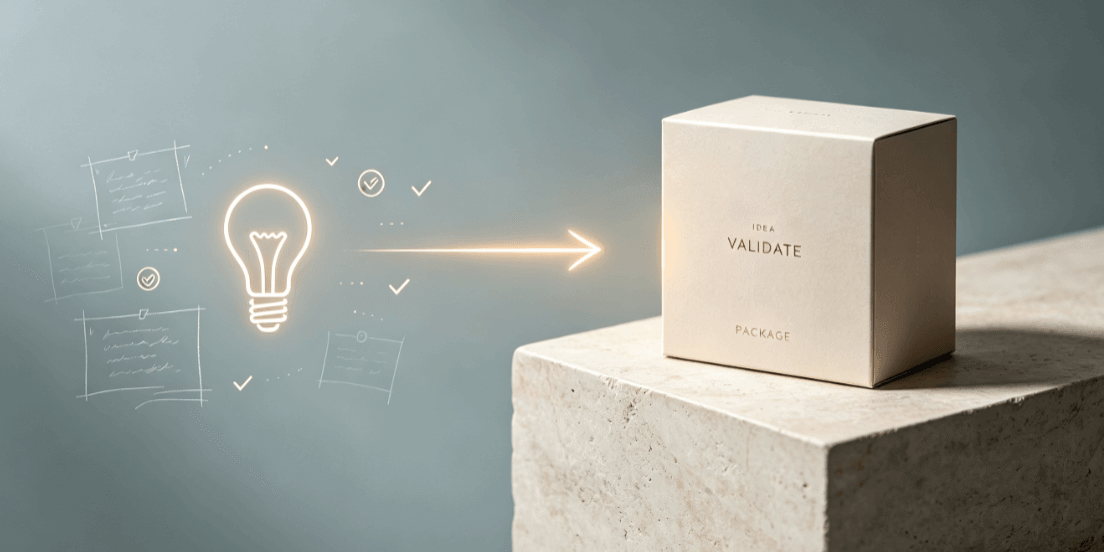
For creators considering their first product, the real challenge is often not coming up with an idea. It is figuring out whether that idea is strong enough to move beyond a conversation or a sketch and become a product people will actually buy.
Importance of innovation and uniqueness
Innovation does not necessarily mean inventing an entirely new category of adult product.
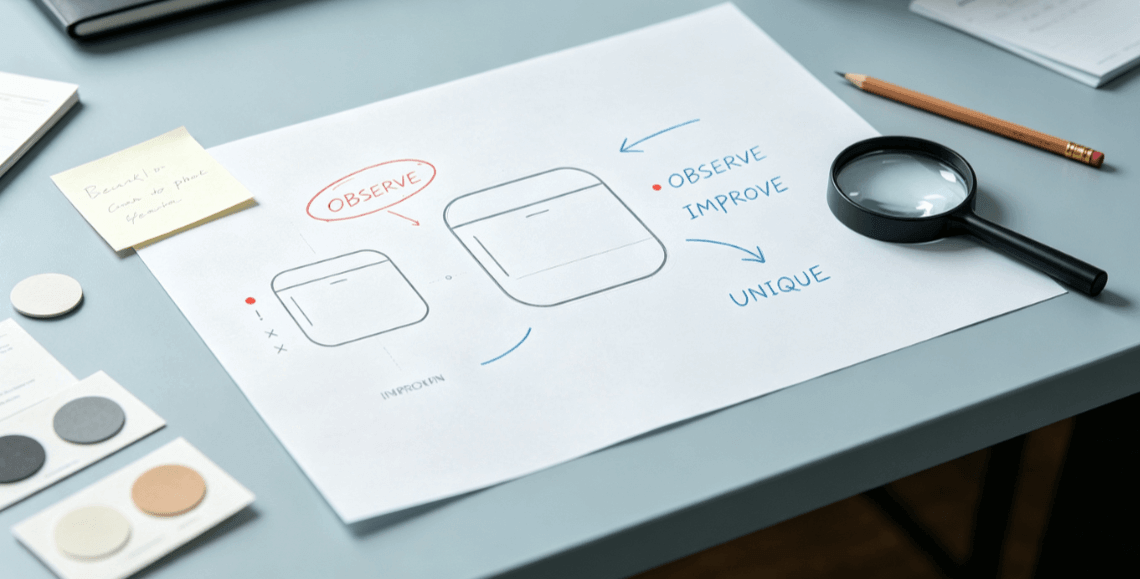
Some of the strongest product ideas begin with a simple observation: “Why doesn’t this work better?”
Perhaps an existing product is uncomfortable for a particular group of users. Maybe the design feels generic, the controls are inconvenient, the material is not what customers expect, or the product simply does not reflect the preferences of a particular community.
For creators, these observations can come directly from their audience.
The important distinction is between an idea that is merely interesting and one that solves a meaningful problem. A visually unusual product may attract attention for a few seconds, but a product that addresses a recurring customer frustration has a much stronger reason to exist.
That is why the best starting point is not necessarily, “What can I manufacture?”
It is:
“What does my audience need that existing products are not solving well?”
Evaluating Your Product Idea
Researching existing adult products and innovations
Before developing a prototype, you need to understand the products already competing for the same customer’s attention.
This does not mean looking at a few competitor websites and deciding whether your product looks different. Good product research goes deeper.
Look at customer reviews. Pay attention to repeated complaints. Examine how competing products are positioned, what materials they use, how they are packaged, and which features appear again and again.
For creators, audience conversations can provide another layer of research that competitors may not have access to.
Imagine that you repeatedly receive messages from followers saying that a certain type of product is too uncomfortable, too large, too difficult to clean, or simply does not fit their preferences. That repeated feedback is more valuable than a single request for a “cool new toy.”
It tells you there may be a problem worth solving.
You should also look at whether the problem is specific enough to build a product around. “People want better products” is too broad. “My audience wants a more comfortable version of this particular product because existing options are too rigid” gives a product development team something concrete to work with.
How to know if your adult toy idea is unique
Uniqueness should be evaluated from the customer’s perspective, not just from the manufacturer’s perspective.
A product does not need to have a completely new shape to be differentiated. Its uniqueness may come from functionality, ergonomics, material choice, size options, accessibility, visual identity, or the specific audience it serves.
A useful adult product idea evaluation starts with a few fundamental questions.
Who is the product actually designed for? What problem does it solve? Why would that customer choose it instead of an existing alternative? Can the difference be explained in one or two sentences? And perhaps most importantly, can the proposed solution actually be manufactured at a reasonable cost?
If you cannot answer these questions yet, that does not mean the idea is bad. It usually means the idea is still at an early stage.
This is where creators can benefit from working with a development partner. You may understand the customer extremely well without knowing how to translate that customer insight into dimensions, materials, structures, molds, and production requirements.
Your experience provides the starting point. Engineering turns it into something manufacturable.
Validating Market Demand
Conducting market research and competitive analysis
A common mistake among first-time product founders is assuming that personal enthusiasm equals market demand.
It does not.
You might love the idea because it solves a problem you have personally experienced. Your followers may also respond positively when you mention it. But before committing significant money to production, you need stronger evidence.
For creators, market validation can be surprisingly accessible.
You already have a communication channel with potential customers. Instead of asking a vague question such as “Would you buy this?”, you can ask more useful questions about the problem itself.
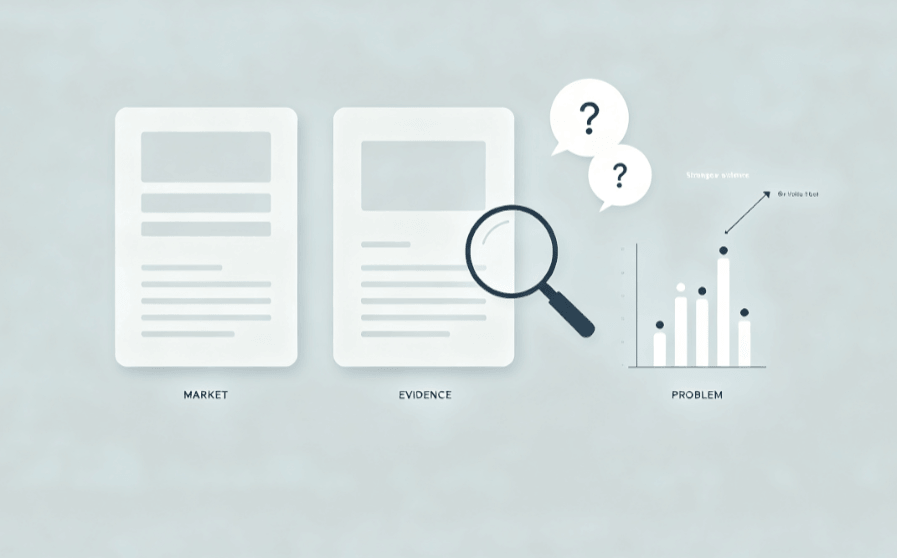
What do they dislike about existing products? Which feature matters most? What would make them switch from their current product? Would they prefer a particular size, material, appearance, or functionality?
These conversations help distinguish genuine demand from polite enthusiasm.
Competitive analysis adds another perspective. If five established brands already offer almost exactly the same product, you need a compelling reason for customers to choose yours.
On the other hand, if competitors are serving the category but consistently receiving complaints about the same issue, the gap may be worth exploring.
How can I validate demand for a new sex toy?
Demand does not have to be validated through a large-scale market study.
A creator with a smaller but highly engaged audience can start by testing the concept directly with that community.
You might introduce the problem through content, compare two potential designs, collect anonymous feedback, or invite followers to discuss what they would change about existing products. A private community can also provide particularly useful qualitative feedback because people may be more comfortable discussing their actual experiences.
The goal is not to get everyone to say yes.
You are looking for consistent signals.
If the same type of customer repeatedly identifies the same problem, expresses interest in the same solution, and is willing to discuss purchasing it, you have a much stronger foundation for development.
You can then move from audience research to a prototype rather than immediately committing to a large production run.
That distinction is especially important for creator brands. A first product should ideally be an experiment with controlled risk, not a massive inventory bet.
Designing Your Product
Engineering and detailed design considerations
Once the idea has been validated, the next challenge is turning it into a real product.
This is where adult product development becomes more than simply creating an attractive 3D model.
A product needs to work in the real world. Dimensions, material behavior, wall thickness, structural strength, ergonomics, mold construction, production tolerances, assembly, packaging, and cleaning requirements can all influence the final design.
This is also where a creator’s role changes.
You do not necessarily need to become an engineer. Your job is to communicate the experience you want the product to deliver and the problem it needs to solve.
A good manufacturer or product development team can then help translate that information into a technical solution.
The process may involve several rounds of design and prototype refinement. Sometimes the first prototype confirms that the basic concept works. Other times, it reveals that a dimension needs to change, a structure needs reinforcement, or a material needs to be reconsidered.
That is normal.
The purpose of prototyping is not to prove that the first design was perfect. It is to discover what needs to change before you invest in mass production.
Trends in sex toys for diverse bodies and abilities
Another opportunity lies in designing for people who have traditionally been overlooked by mainstream product development.
Bodies are diverse. So are physical abilities, preferences, and ways of interacting with products.
A product that works well for one customer may be inconvenient or inaccessible for another. Grip size, controls, flexibility, weight, shape, positioning, and ease of cleaning can all influence the experience.
For brands serving a specific community, this can become a meaningful source of differentiation.
Creators may already have an advantage here because they interact directly with people who share particular needs. What looks like a niche complaint can sometimes reveal an underserved market.
The important thing is to avoid treating inclusivity as a marketing label. It should influence the actual design decisions.
What safety standards must adult products meet before manufacturing?
Safety needs to be considered from the beginning of development.
Material selection is one part of the equation, but it is not the only one. Product construction, electrical components where applicable, manufacturing consistency, packaging information, labeling, testing, and quality control can all matter depending on the product and target market.
This is particularly important for creator brands because the product is connected directly to a personal reputation.
If a customer receives a poorly made product, they may not distinguish between the creator and the factory behind it. The complaint is likely to reach the creator first.
That makes manufacturer selection part of brand protection.
Before production, discuss material specifications, quality-control procedures, applicable testing, and the requirements of the markets where the product will be sold. Where necessary, brands should also obtain professional legal or regulatory advice rather than relying entirely on a manufacturer’s assumptions.
Business Planning and Legal Compliance
Writing a business plan and budgeting
A product idea can be exciting while still being a bad business decision.
The financial side needs to be considered before manufacturing begins.
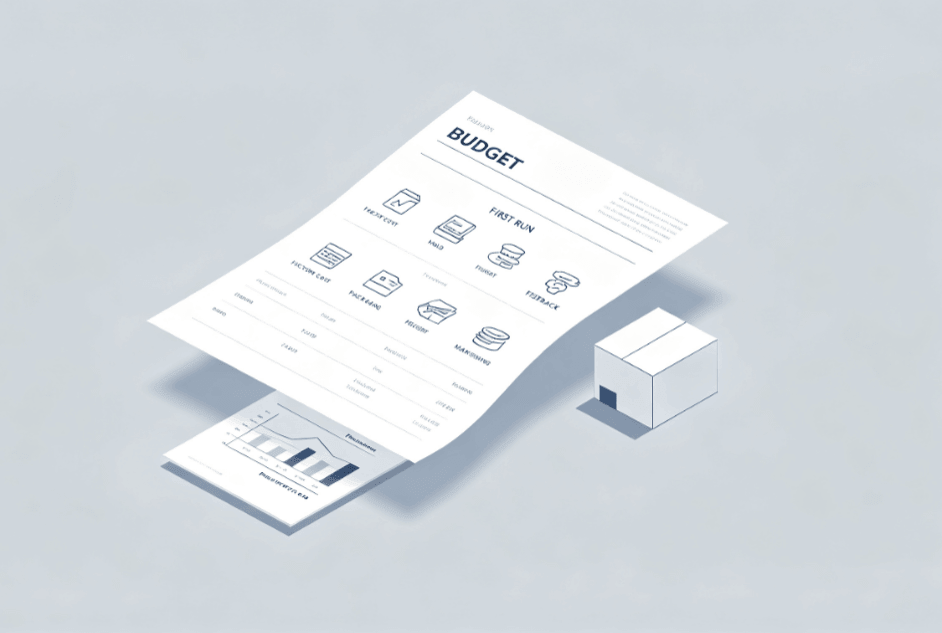
You need to understand not only the factory price but also development costs, molds, packaging, freight, warehousing, marketing, payment fees, platform costs, returns, and other expenses that contribute to the final landed cost.
This is where creators should be particularly careful.
Having a large audience does not guarantee that a large percentage of followers will become customers. A smaller first production run can provide much more useful information than producing thousands of units based solely on social media engagement.
The first product can be used to learn.
How many people actually purchase? What price works? Which features matter? What do customers complain about? Would they recommend it? Are they asking for another version?
Those answers can guide the next production run far more effectively than assumptions made before launch.
Protecting your intellectual property (IP)
Creators also need to think about what happens when they share their idea with a manufacturer.
If the product concept is commercially sensitive, confidentiality should be addressed before detailed discussions begin.
An NDA can help establish expectations around confidential information, while trademarks, design rights, patents, or other forms of IP protection may be relevant depending on the nature of the invention and target markets.
For creators, privacy can go beyond the product itself.
Your identity, audience data, launch plans, pricing strategy, and commercial relationships may all be sensitive. A product development partner therefore needs to understand that confidentiality is part of the business relationship, not merely a document to sign at the end.
Legal and compliance considerations for adult products
The legal requirements for adult products can vary depending on the product, destination market, and sales channel.
Brands should consider requirements related to product safety, materials, labeling, packaging, advertising, importation, electrical components, and consumer protection.
It is also important to distinguish manufacturing support from legal advice. A manufacturer can help provide technical information and production documentation, but the brand remains responsible for understanding the requirements applicable to its own business and markets.
For a creator launching a product under a personal brand, compliance should be treated as part of reputation management.
A product launch may generate significant attention, but attention is only valuable when the underlying product can stand up to customer expectations.
Manufacturing Process
Finding and choosing a manufacturer
Finding a manufacturer is not simply a matter of finding the lowest quotation.
The cheapest unit price can become expensive if the manufacturer cannot communicate clearly, cannot refine prototypes, has inflexible MOQs, or produces inconsistent quality.
For a first-time creator brand, development capability may be more important than shaving a few cents off the initial unit cost.
Look for a partner that can understand your product concept, discuss engineering considerations, develop prototypes, explain production limitations, and support you through sampling and manufacturing.
Privacy should also be part of the evaluation.
Creators are often putting their personal reputation behind the product. They need confidence that their identity, product concept, and business information will be handled appropriately.
This is why a creator-focused manufacturing process can look very different from a traditional catalog purchasing model. Instead of choosing an existing product and adding a logo, the development process can begin with the creator’s audience insight and work toward a product designed around that insight.
Licensing vs. manufacturing yourself
Not every product entrepreneur needs to build a factory.
Licensing may make sense when you have a strong invention or intellectual property but do not want to manage production, inventory, and supply-chain operations.
Working with an OEM or ODM manufacturer is another route. You retain greater control over the product while relying on an experienced production partner for engineering, prototyping, manufacturing, and related processes.
For most creators developing a first product, building an entire manufacturing operation would introduce unnecessary complexity.
The more practical question is often: Which parts of the process do I need to own, and which parts should an experienced partner handle?
Your audience relationship and brand identity may be your strongest assets. Manufacturing expertise can come from the right partner.
Discussing scaling up your product
The first production run should not be viewed as the final destination.
It is a learning stage.
Once real customers have used the product, you have information that cannot be obtained from a spreadsheet or competitor analysis. You can see which features people actually value, what needs improvement, and whether the product has enough repeat demand to justify scaling.
This makes small-batch validation particularly useful for creator brands.
Instead of purchasing a large amount of inventory before knowing whether the product works commercially, you can test a smaller quantity, gather feedback, improve the product, and then increase production when the evidence supports it.
Scaling should follow validation, not replace it.
Ensuring Product Success
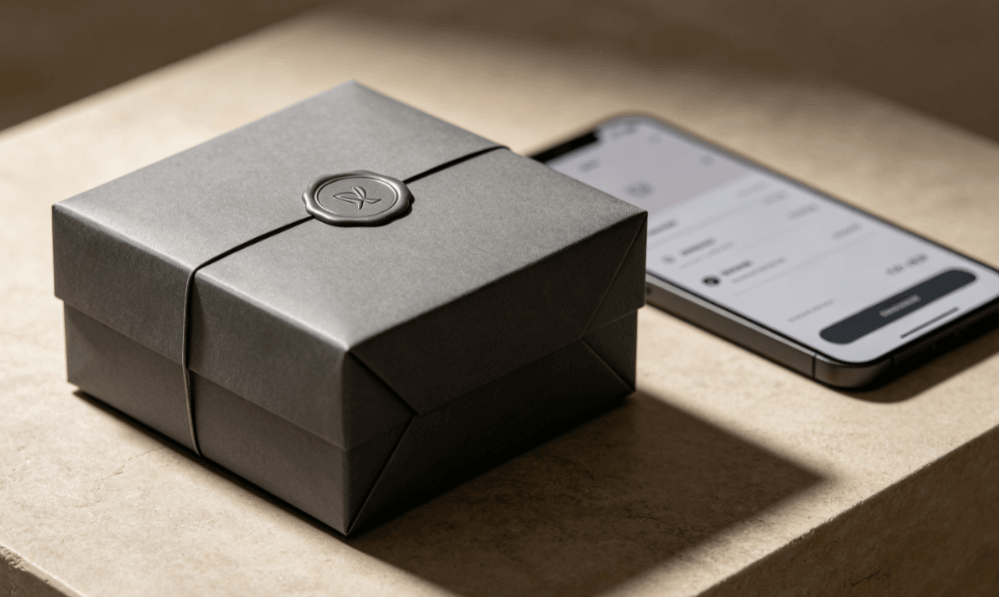
Importance of discreet packaging and billing practices
For adult products, privacy can influence the purchasing decision itself.
A customer may be interested in a product but hesitate if they are concerned about how it will appear on the outside of the package, how the transaction will be described, or what information may be visible during delivery.
For creators, this becomes even more important because the product may be associated with a recognizable personal brand.
A professional customer journey should therefore consider privacy from the online store through payment, fulfillment, shipping, and customer support.
Discreet packaging is not necessarily the reason someone buys a product, but a lack of privacy can certainly become a reason not to buy it.
How important is discreet packaging for adult product success?
Discreet packaging is one part of a larger trust experience.
Customers want to know that the product itself is reliable, that their information is handled appropriately, and that purchasing it will not create unnecessary exposure.
A thoughtful approach can include neutral outer packaging, appropriate shipping documentation, clear privacy policies, and careful handling of customer information.
For creators, this also protects the relationship they have built with their audience. If followers trust you enough to purchase a product associated with your name, the experience needs to reflect that trust.
Building long-term trust with your audience
The biggest advantage a creator has over a new anonymous brand is not necessarily product knowledge.
It is trust.
Your audience already knows your personality, your content, and your opinions. Some followers may have been interacting with you for years.
That means a creator product can be much more than another SKU.
It can become an extension of the relationship between the creator and the audience.
But that relationship also creates responsibility. If you recommend a product that disappoints customers, the disappointment is attached to your reputation.
This is why product development should be treated as a long-term brand decision rather than a quick monetization opportunity.
Listen to customer feedback after launch. Pay attention to recurring requests. Look at what customers actually use and what they ignore.
The first product may eventually become the foundation for a broader creator brand, but only if the audience continues to trust the person behind it.
Trend Intelligence 🆕
Eco-friendly body-safe materials and sustainable packaging
Sustainability is becoming a more relevant consideration in product development, particularly as consumers become more conscious of materials, packaging waste, and product longevity.
For adult brands, this does not necessarily mean making exaggerated environmental claims. It can mean making practical improvements.
A brand might consider more responsible material choices where appropriate, reducing unnecessary packaging, improving packaging efficiency, or designing products that are durable enough to avoid premature replacement.
The important point is to make sustainability part of the product decision rather than treating it as a marketing phrase added after development.
Discreet app-connected toys with AI personalization
Connected products are another area worth watching.
App-connected products can introduce personalization, remote control, data-driven experiences, and new forms of interaction. AI may eventually make these experiences even more adaptive.
But technology should not be included simply because it is trending.
A technically complicated product introduces additional challenges around software, connectivity, battery performance, privacy, cybersecurity, updates, and customer support.
For a creator launching a first product, a simpler product that solves a clear audience problem may be a much stronger commercial opportunity than a highly technical product with no clear customer need.
The principle remains the same: technology should strengthen the product idea, not become the product idea.
FAQ
A:Start by defining the target customer, the problem your product solves, and what makes it different. Then work with a manufacturer or product development partner to create a prototype and refine the design.
A:Yes. You can pitch your concept to manufacturers, licensing companies, or product development partners. If the idea is confidential, consider using an NDA before sharing sensitive details.
A:You can explore licensing companies and manufacturers that accept external product ideas. Always review their submission, ownership, confidentiality, and royalty terms first.
A:There is no fixed margin because profitability depends on product cost, retail price, packaging, shipping, marketing, and sales channels. Calculate the complete landed cost before setting your target margin.
A:Start with a clear product concept and target audience, then discuss the idea with an experienced manufacturer. They can help turn your concept into a design, prototype, and production-ready product.