You have a brand idea. You have energy. You probably have a small team of one to five people and a budget that cannot absorb a bad first order.
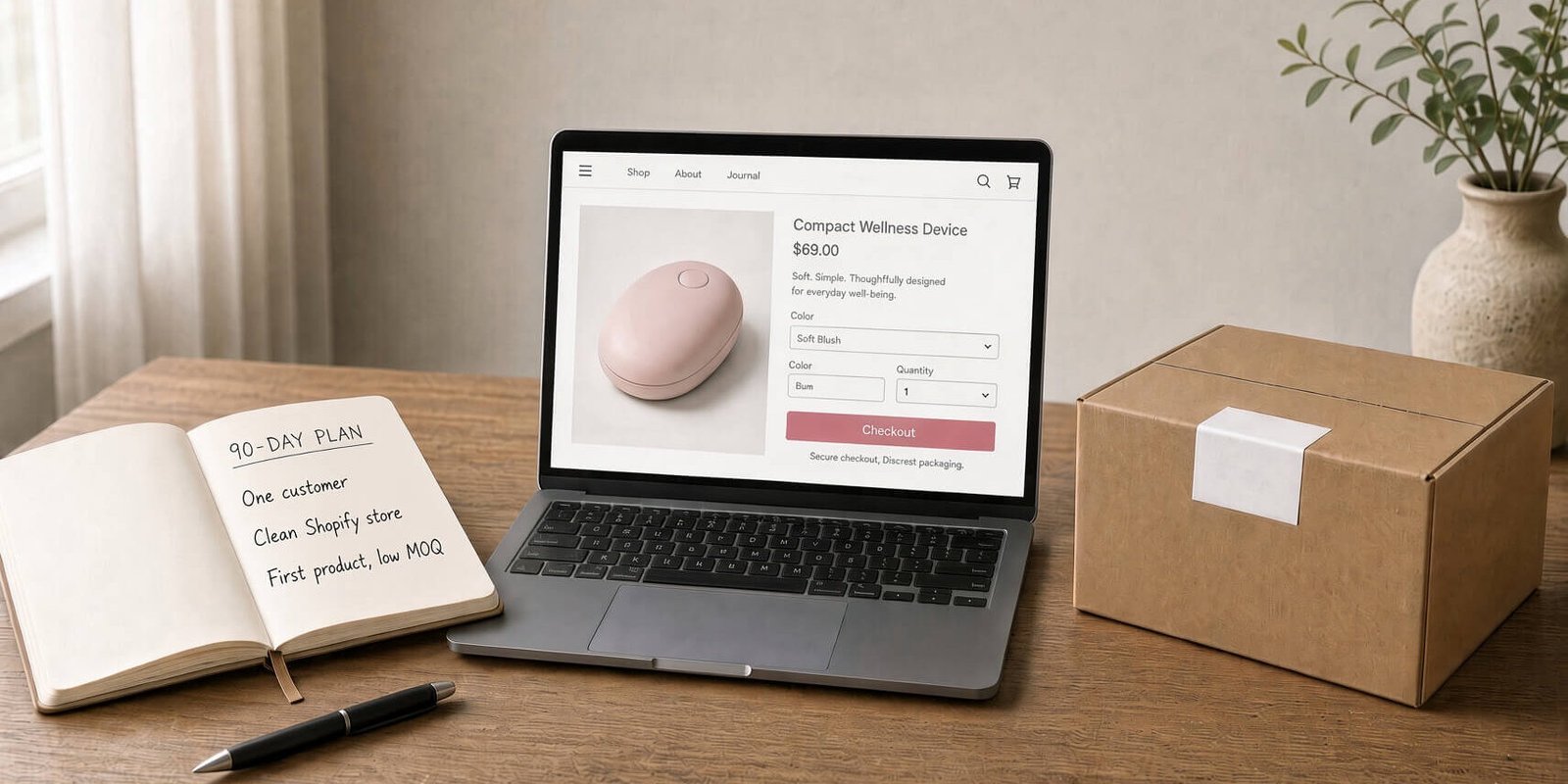
The first 90 days are not about looking like a giant sexual wellness company. They are about building a clean Shopify store, choosing one clear customer, and putting a first product in front of real buyers without locking cash in high MOQ inventory.
This guide follows that path. It is written for new DTC founders, Shopify startups, and sexual wellness teams who want to start an adult toy brand the lower-risk way.
Understanding the Market and Laying the Foundation
Do not open a mold in week one. Do not order 3,000 units because a factory quote looked cheap per piece. First understand the market, the buyer, and the job your product must do.
The Adult Toy Industry in 2026: Trends and Opportunities
Sexual wellness is no longer a hidden corner of e-commerce. More shoppers search for body-safe materials, quieter motors, smaller travel toys, inclusive sizing, and products that feel like self-care instead of a joke gift.
In 2026, three shifts help small DTC brands:
- Shoppers will pay more for a clear story and safer materials than for a generic catalog item.
- Creators, newsletters, and niche communities can launch a first SKU faster than a traditional retail rollout.
- Low-volume production is more available than it was five years ago. You can test a design before you commit to a large tool and a warehouse full of unsold stock.
The opportunity is not “sell every type of toy.” The opportunity is to own one honest promise: comfort, quiet use, beginner ease, couple play, or a specific material and shape your buyer cannot find on a crowded marketplace.
Why Direct-to-Consumer (DTC) is the Ideal Model for Adult Toys
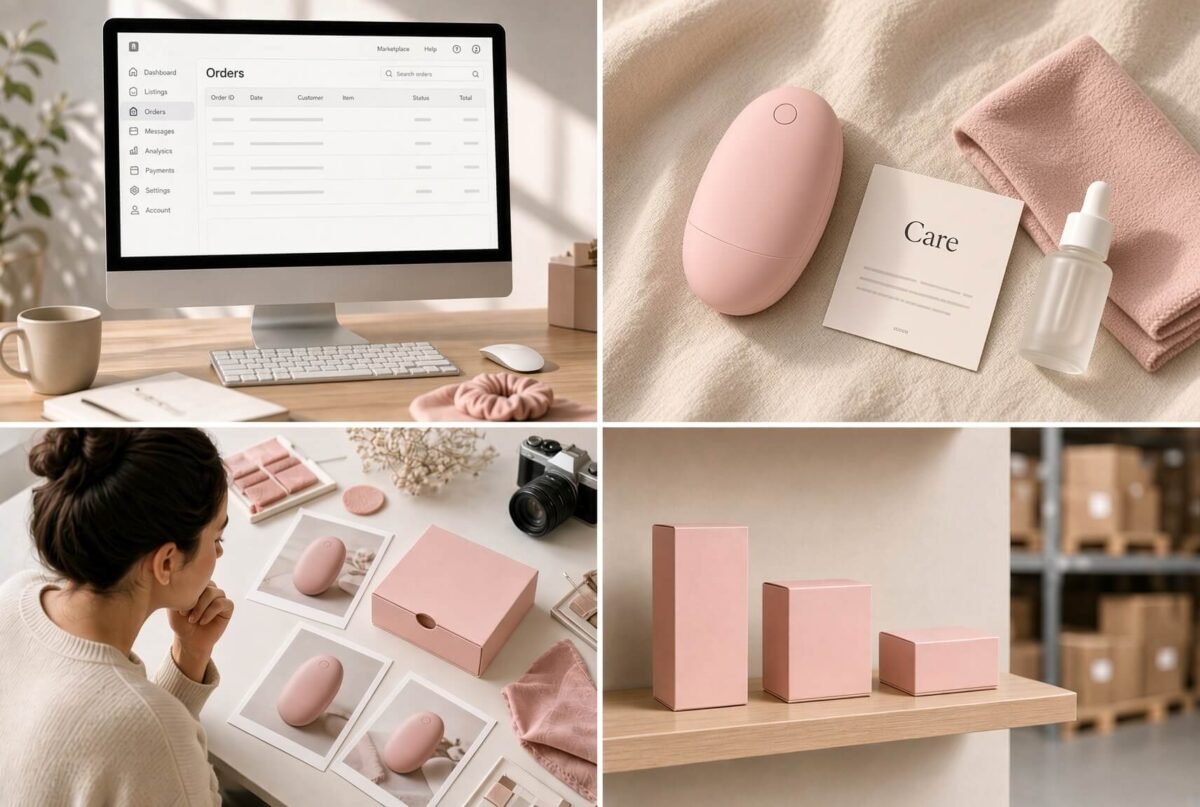
DTC means you sell to the end customer yourself. On Shopify, that usually means your own store, your own email list, and your own product page.
This model fits adult toys for simple reasons:
- Privacy matters. Many buyers do not want a shopping history sitting on a mass-market account they share with family.
- Education matters. A product page can explain use, care, materials, and expectations. A crowded marketplace listing often cannot.
- Brand control matters. You choose the photos, the tone, the packaging, and the refill or follow-up offer.
- Inventory risk can stay smaller. You are not filling a distributor’s warehouse. You can start with a pilot run.
DTC is not easier than wholesale. It is more direct. You own the customer relationship, and you also own the first mistakes. That is why the first 90 days should stay narrow.
Defining Your Target Audience for Maximum Impact
“Everyone who likes sex toys” is not an audience. It is a wish.
A useful first audience sounds like this:
- A first-time buyer who wants a small, body-safe toy and discreet delivery
- A couple looking for a simple shared product, not a 12-SKU collection
- A sexual wellness shopper who cares about silicone grade, cleaning, and noise
- A Shopify customer who already buys self-care and will try one well-explained product
Write down four things before you design packaging or ads:
- Who is the buyer?
- What problem or desire do they have?
- Why would they trust a new brand?
- What would make them return the product?
If you cannot answer those questions, pause product development. Talk to 10–20 possible buyers. Study reviews on similar products. Watch which words people use: too loud, too big, cheap smell, hard to clean, packaging not discreet.
A small team moves faster when the customer is specific. A vague customer leads to a vague product, and a vague product is how first-time founders spend money twice.
If you already have a product idea and want a structured way to check it before tooling, start with a lower-risk path from idea to first product.
Building Your Brand Identity
Your store can be simple. Your name and voice cannot be sloppy. Adult shoppers decide in seconds whether a new brand feels safe or careless.
Choosing the Right Name, Domain, and Visual Identity
Pick a name you can say out loud. Check the domain. Check social handles. Check trademark databases in the markets you plan to sell.
Avoid names that only work as a joke. Jokes get cheap traffic. They rarely build a wellness brand.
For visuals, keep the first version tight:
- One primary color system
- One clean type pairing
- Product photography with real materials in frame
- Packaging that looks calm in an unboxing photo
You do not need a 40-page brand book in month one. You need a look that still feels like you when the second product arrives.
Creating a Sex-Positive, Inclusive Brand Voice
Sex-positive does not mean graphic. Inclusive does not mean you must serve every identity in the first SKU.
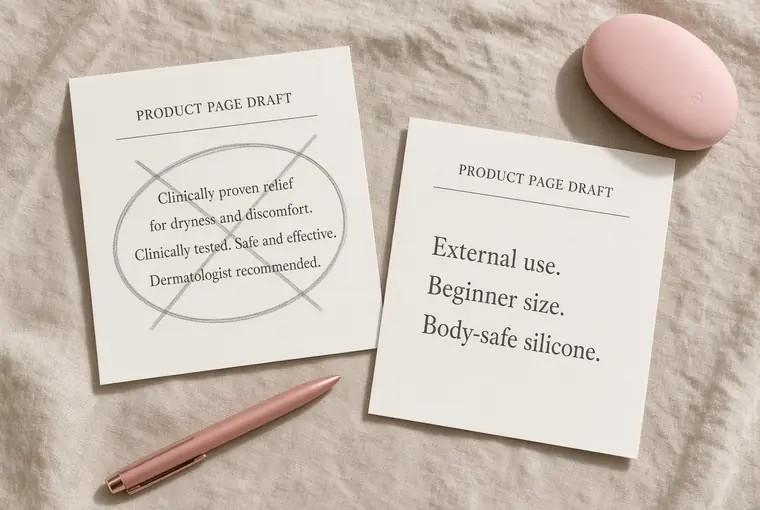
It means your copy treats desire as normal. It means you do not assume every body, every couple, or every experience is the same. It means you explain the product without shame and without fake medical claims.
Write like a clear friend:
No invented science
Short sentences
Plain words for materials and use
Honest limits (“this is external,” “this is a beginner size”)
- No invented science
If your team is one to five people, assign one person to own the voice. Mixed tones on a product page kill trust.
Establishing Trust Through Transparency and Ethics
New adult brands lose sales because they hide basics.
State the material. State how to clean it. State where it is made at a level you can stand behind. State what you tested and what you have not tested yet. Do not claim “medical grade” or “FDA approved” unless that is actually true for the product and the market.
Ethics in the first 90 days is practical:
- Do not oversell a prototype as a finished hero product
- Do not launch 15 colors if you cannot control color matching
- Do not collect more customer data than you will protect
- Do not promise 3-day shipping if your first batch is still in production
Trust is a conversion tool. It is also how you sleep after the first 100 orders.
Setting Up Your Shopify Store
Shopify is not magic. It is a store system that a small team can launch, edit, and measure without hiring a full engineering crew.
Why Shopify is the Best Platform for DTC Adult Toy Brands
Shopify works well for this category because you can:
- Launch a focused catalog fast
- Control product pages, education blocks, and FAQ content
- Add privacy-friendly checkout settings and discreet shipping language
- Connect email tools, reviews, and analytics without rebuilding the site
- Start with one theme and improve it after real traffic arrives
Other platforms can work. For a first-time DTC adult brand, Shopify is usually the shortest path from idea to a store you can share with buyers.
Essential Features for a Successful Adult Toy Store
In the first 90 days, install only what you will use.
You need:
- Clear product pages with materials, dimensions, care, and who it is for
- An FAQ that answers shipping discretion, returns, and cleaning
- Reviews or photo reviews once you have real customers
- Email capture that does not feel like a trap
- Age confirmation where your market requires it
- A simple blog or guide hub for SEO and education
- Inventory alerts so you do not oversell a pilot batch
You do not need a custom app stack that costs more than your first sample run.
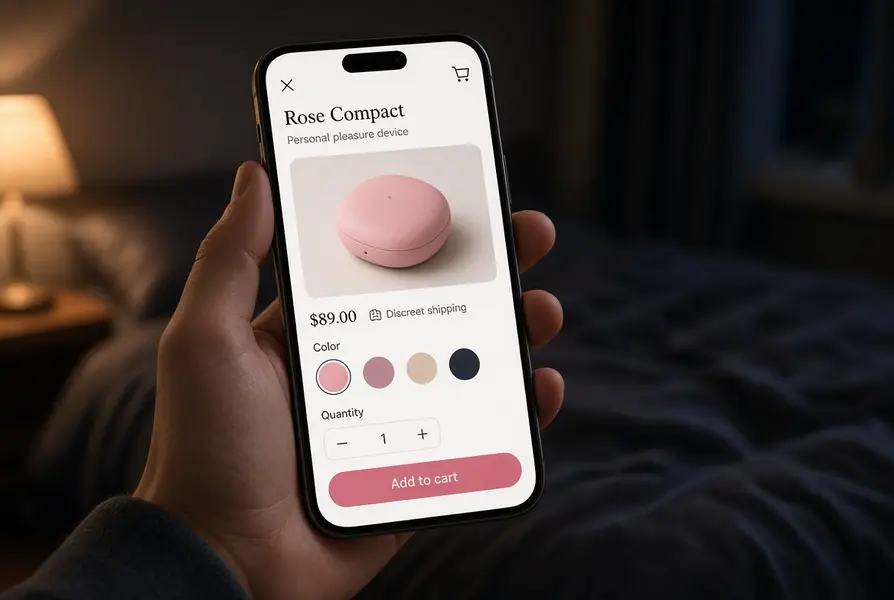
Mobile-First Design and Speed Optimization
Most adult product browsing happens on a phone, often in a private moment. Slow pages and tiny buttons lose the sale.
Check these basics:
- Product images load quickly
- Add to cart is easy with one thumb
- Variant buttons are large enough
- Shipping and discretion notes sit near the price
- Pop-ups do not block the buy button
If the store feels heavy, strip it down. A fast, quiet page beats a beautiful page that stutters.
Securing Safe and Private Transactions
Shoppers worry about two things: payment safety and mailbox privacy.
On the store, say exactly what happens after checkout. Will the charge descriptor look professional? Will the box look plain? Will the packing slip avoid product names?
Use HTTPS, a current Shopify plan, and limited staff access. Do not keep customer notes in a shared spreadsheet. Privacy is part of the product.
Legal and Compliance Considerations
This section is a planning guide, not legal advice. Adult product rules change by country, state, payment partner, and ad platform. Budget time and a professional review before you spend on ads or a large production run.
Navigating the Legal Framework for Selling Adult Products
Map the basics before launch:
- Business registration and tax collection in your selling regions
- Age restrictions and how you will check them
- Product claims you can and cannot make
- Labeling, instructions, and warning language
- Import rules if you manufacture overseas
- Return policies that still protect hygiene and local law
- Data privacy rules for email and checkout
Keep a simple folder: supplier documents, material statements, test reports you actually have, and packaging copy. When a payment provider or a freight partner asks a question, you should not scramble.
A common founder mistake is to treat compliance as a week-12 task. It is a week-1 task. It affects your gateway, your ads, your packaging, and your first factory brief.
Payment Gateways That Support Adult Toy Sales
Not every popular gateway likes adult products. Some approve a store, then freeze it after the first sales spike.
Before you switch on paid traffic:
- Read Shopify’s current restricted-product rules
- Ask each gateway, in writing, whether your exact catalog is allowed
- Have a backup processor in mind
- Match your product descriptions to what you told the processor
- Avoid bait-and-switch listings that say “wellness tool” and then sell something the policy forbids
High-risk processors exist for a reason. They cost more. That extra fee is often cheaper than a frozen account in week six.
If a provider says no, do not argue in public comments. Adjust the catalog or the processor. Your first 90 days need working checkout more than they need a clever workaround.
Sourcing High-Quality Products
This is where many 1–5 person teams freeze. You can have a beautiful Shopify theme and still fail if the product smells, sheds color, or arrives looking different from the sample.
Finding Trusted Suppliers for Adult Toys

Look for a partner who can explain process, not only price.
Ask:
- Can I start with a prototype or a small pilot instead of a large MOQ?
- How do you keep the sample aligned with mass production?
- What materials do you recommend for this use, and why?
- What is the real timeline from 3D to sample to first shipment?
- What costs sit outside the unit price: mold, color, packaging, testing, freight?
- Who owns the mold if we open one?
A good factory partner talks you out of rushing the steel mold. That is a feature, not a delay.
White Labeling vs. Custom Manufacturing
These are different risk levels.
White label / private label on an existing design
Faster. Lower development cost. Good for learning checkout, ads, and packaging. Weaker differentiation. You may share a shape with other brands.
Custom manufacturing
Your geometry, your brand details, your packaging system. Slower. More decisions. Higher upfront cost if you open a mold too early. Stronger long-term brand.
For most Shopify startups in the first 90 days, the smart sequence is:
- Validate the buyer and the promise
- Prototype or adapt a design at low cost
- Sell a small batch
- Only then invest in a more custom tool
You do not need a perfect 100-point product on day one. An 80-point product that real customers use will teach you more than a polished render that never ships.
Ensuring Product Safety and Compliance
“Body-safe” is not a mood. It is a set of choices.
Focus on:
- Non-porous materials where contact requires it
- Clear hardness and surface finish
- Colorants and additives your factory can document
- Easy cleaning in real bathrooms, not only in a studio shot
- Consistent sample-to-bulk checks for smell, seams, size, and function
Ask for a golden sample and treat it as the contract. One pretty sample is not enough. A small pre-production run shows what happens when the factory makes more than one piece.
Do not skip this because you are excited to launch. Sample drift is one of the fastest ways a new DTC brand burns its first reviews.
Leveraging 2026 Trends for Differentiation
Trends should help a small catalog stand out. They should not add five extra apps and a custom motor you cannot support.
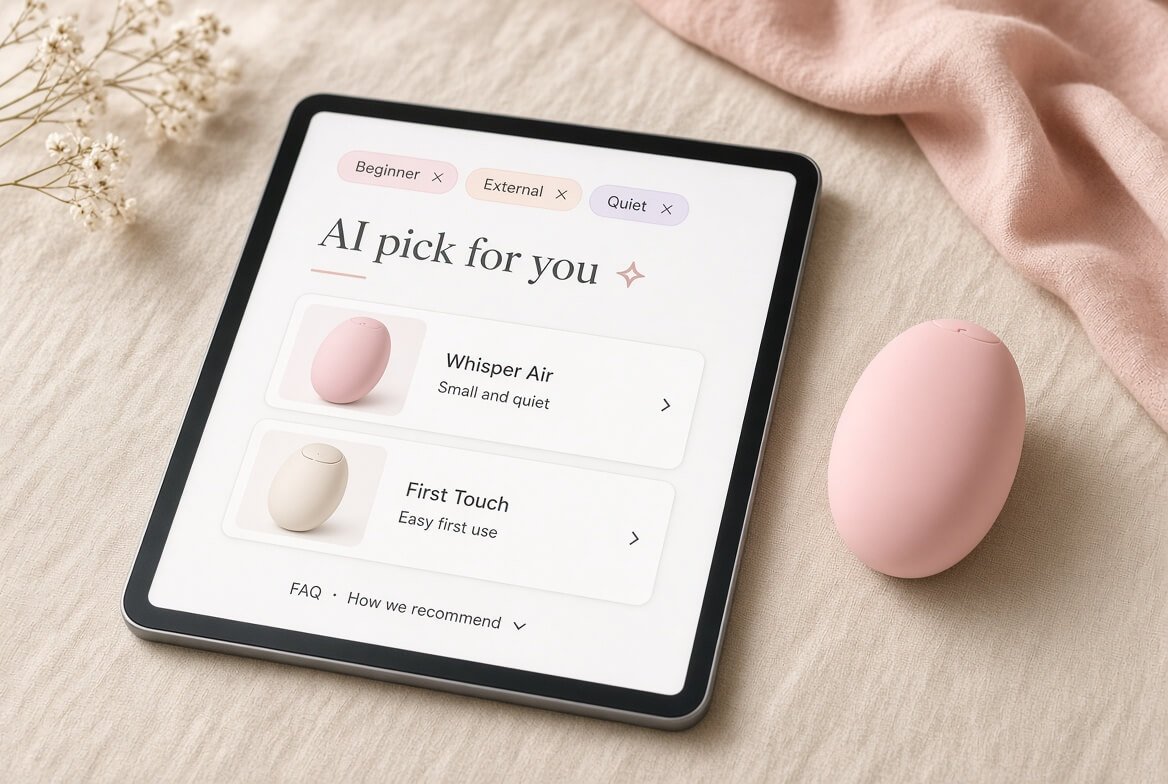
AI-Powered Intimate Product Recommendations and Personalization
Used well, AI on a Shopify store can ask a few calm questions and suggest one or two products. Used poorly, it feels like surveillance.
Keep it light in the first 90 days:
- A short quiz: beginner vs experienced, external vs internal, noise sensitivity, size preference
- Results that explain why the product fits
- An easy path to a human FAQ if the shopper is unsure
Do not collect sexual history you do not need. Personalization should reduce confusion, not create a data pile.
Creating Integrated Sex-Positive Educational Content on Product Pages
Education belongs next to the buy button, not only in a blog no one finds.
On each product page, answer:
- What this product is for
- What it is not for
- How it feels, in plain language
- How to clean and store it
- What comes in the box
- How discreet the shipment is
This content helps SEO. It also cuts returns and support tickets. Shoppers in this category punish brands that leave them guessing.
Collaborating with Influencers for UGC on Mainstream Platforms
Paid ads in this niche get blocked. User-generated content still moves.
Work with creators who already talk about wellness, relationships, or honest product reviews. Give them a real sample, a clear usage brief, and permission to say what they dislike. Forced scripts look like ads and die in the algorithm.
Start with a few people who match your exact buyer. Ten average posts help less than two credible ones.
Marketing and Advertising Strategies: Overcoming Challenges
Adult brands do not get the same ad freedom as candle brands. Plan for that on day one.
Compliant Marketing Strategies to Navigate Ad Restrictions
Assume Meta and Google will limit or reject many adult toy ads. Build channels that do not depend on a single review team.
Practical options:
- SEO pages that answer real search questions
- Email from day one
- Organic social that stays inside each platform’s rules
- Creator content and affiliates
- Niche newsletters and community partners
- Retail media only after checkout and fulfillment are stable
Write ads and landing pages that match. If the ad is soft wellness language, the landing page cannot suddenly become graphic. Mismatch triggers bans and refunds.
Organic Traffic Through SEO and Content Marketing
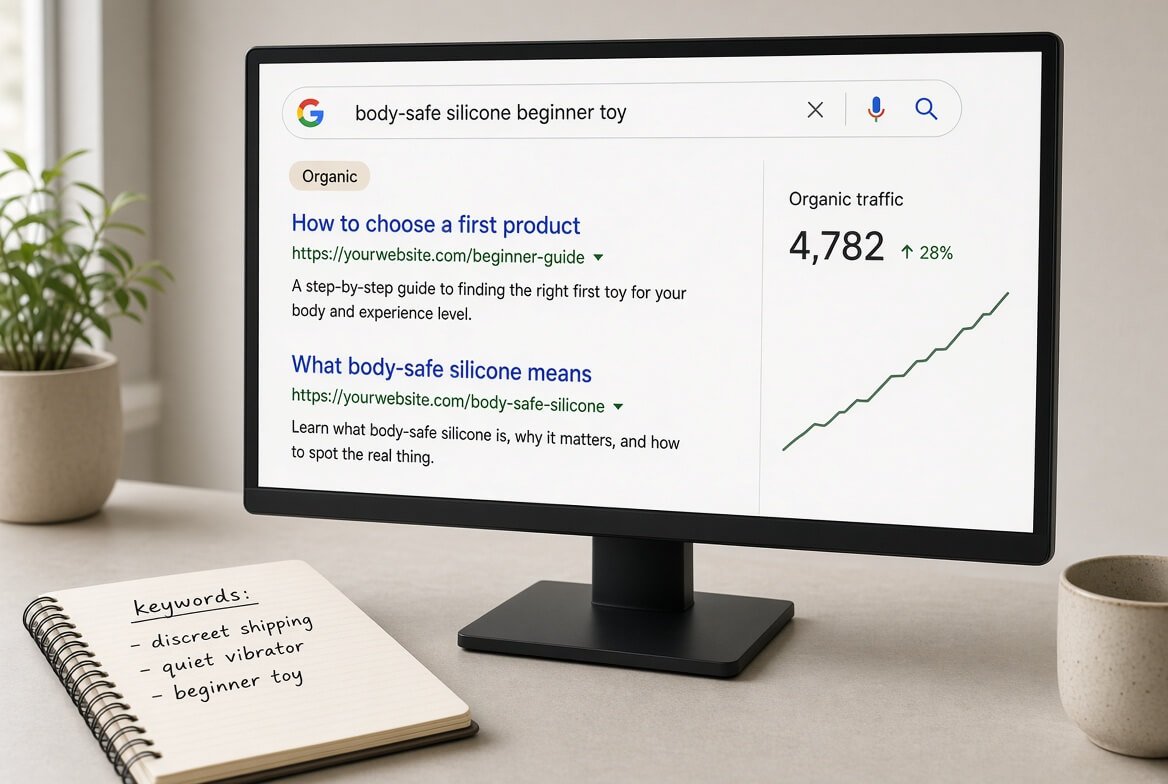
Organic search is slow at first and then very useful. Your ICP already searches phrases like “start adult toy brand,” “private label adult toys,” and “low MOQ sex toys.” Buyers search simpler phrases: discreet shipping, body-safe silicone, quiet vibrator, beginner toy.
Publish content that matches the stage:
- How to choose a first product
- How to clean and store it
- What materials mean in practice
- What to expect from a new brand’s first shipment
One strong article plus a clear product page beats a dozen thin posts.
Building a Community Through Social Media and Email Marketing
Social can introduce you. Email can keep you.
On social, pick one or two platforms you can actually maintain. Post education, process, and real product texture. Avoid daily empty slogans.
On email:
- Welcome sequence that explains brand, materials, and shipping privacy
- Post-purchase care guide
- A reorder or accessory note after enough time has passed
- A request for a review once the product has been used
Community is not a Discord you cannot moderate. For a five-person team, community is responsive support and a list you respect.
Offering Discreet Packaging and Promotions
Discretion is a feature. Say it on the product page, the cart, and the confirmation email.
Use plain outer cartons. Keep invoices generic if that is lawful in your market. Do not print the product name on the tape.
Promotions in month one should be simple: a launch bundle, a first-order education insert, or free care instructions. Deep discounts train buyers to wait. They also crush margin on a small first batch.
Driving Sales During the First 90 Days
The goal is not a vanity launch video. The goal is enough real orders to learn.
Launch Campaigns That Attract and Convert Your First Customers
A clean 90-day launch can look like this:
Days 1–30
Positioning, store skeleton, supplier shortlist, prototype or white-label shortlist, payment and legal checks.
Days 31–60
Sample review, product page, packaging test, email setup, content drafts, small warm audience (friends, creators, waitlist).
Days 61–90
Pilot inventory lands. Soft launch to the list. Collect reviews. Fix the top three checkout and fulfillment issues. Only then raise spend.
Your first campaign should send people to one hero product, not a messy catalog. Tell them what arrives, when it arrives, and how private the box is.
Using Early Customer Feedback to Refine Your Product and Strategy
Read every review and every support ticket.
Sort comments into four buckets:
- Product feel and function
- Instructions and expectations
- Packaging and discretion
- Site and shipping experience
Change copy first. Change process second. Change the product third. Tooling changes are expensive. Many early complaints are actually page and expectation problems.
This is the 80-point method in practice. Ship a solid first version. Let users show you the next 20 points.
Scaling Slowly with Paid Ads and Niche Channels
When checkout works and the first batch is not a disaster, add spend in small blocks.
Test one audience, one offer, one landing page. Kill losers quickly. Keep winners boring and stable.
Niche channels often convert better than broad adult-adjacent ads: targeted newsletters, specialist affiliates, creator live sessions, and search terms with clear intent.
Do not scale ads to a product you cannot restock. Low MOQ is a safety tool. It is also a ceiling until the second order is planned.
Customer Experience Best Practices
In adult DTC, service is part of safety. People write to you about intimate products. Treat that with care.
Prioritizing Customer Privacy and Data Security
Limit who can see orders. Use two-factor login. Do not put sexual details in order tags unless needed for fulfillment.
Tell customers what you store and why. Delete what you do not need. A privacy page written in plain English is more useful than a copied legal wall.
Improving Conversions with Trust Signals and User Reviews
On the product page, show:
- Materials
- Real dimensions
- Care steps
- Discreet shipping
- Return rules
- Reviews with photos when you have them
- A human contact path
Do not buy fake reviews. In this category, fake social proof collapses the brand the first time a real user posts a different experience.
Offering Exceptional Post-Purchase Service to Build Loyalty
After the order:
- Send a tracking note that does not expose product names in a shared inbox if you can avoid it
- Send a care guide
- Answer tickets without humor that shames the buyer
- Make replacement decisions quickly when a defect is real
Repeat buyers fund the second SKU. A cold “no refunds ever” policy may protect one unit and lose the brand.
Data-Driven Growth Strategies
Data should reduce anxiety, not create a new full-time job.
Using A/B Testing to Optimize Website Elements and Ads
Test one thing at a time:
- Headline on the hero product
- Photo set
- Shipping-discretion block near the price
- Offer on the thank-you page
You need enough traffic for a test to mean anything. In week two, just fix obvious friction. In week ten, start structured tests.
Analyzing Customer Data Ethically to Personalize Offerings
Look at:
- Which product page people leave
- Where carts drop
- Which email gets opened
- Which questions hit support
Use that to improve pages and inventory planning. Do not build creepy segments based on intimate answers from a quiz.
Ethical data use is also brand voice. Your ICP is already anxious. They notice when a store feels extractive.
Leveraging Email Automation for Upsells and Retention
Three automations are enough at the start:
- Welcome and education
- Post-purchase care and review request
- Replenish or complementary product after a sensible delay
Write like a person. One product recommendation is enough. A 12-email blast on day three feels like spam and gets you marked as such.
FAQ
A:Follow local law, Shopify rules, and each ad platform’s adult policy. Many big ad networks limit or ban explicit ads, so do not rely on one channel.
A:It depends on the product and country. Confirm with the provider in writing and keep a backup gateway.
A:Show discreet shipping before checkout, keep the form short, and make the page fast on mobile.
A:Use reviews, email, and a simple FAQ first. Extra apps often slow the store more than they help.
A:SEO, email, creator content, and niche affiliates. Paid social is optional and easy to lose.