
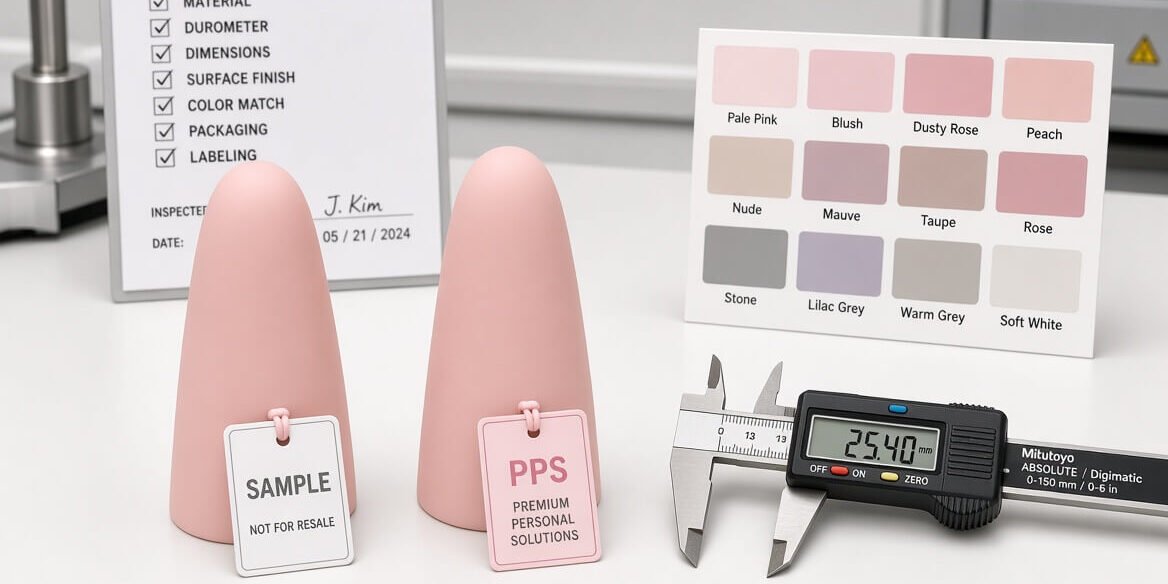
You held the sample in your hand and thought, this is the product.
A few weeks later the bulk carton opened. The color was off. The silicone felt harder. The base sat wrong. Your Shopify photos no longer matched the thing you had to ship.
That gap is how a first adult toy brand burns money. Not because the idea was bad. Because the sample and the factory run were treated as the same job, and they are not.
If you are starting a small DTC line and you need a factory that will not leave you alone with that risk, begin at iGoods.
Understanding Samples vs Mass Production
A sample answers “can this exist?”
Mass production answers “can this exist 300 times, the same way, on a date?”
New founders mix the two. They approve a beautiful one-off, then expect the line to copy it by memory. The line does not work by memory. It works by what you froze on paper, and by what you checked again before the pour started.
The Sampling Phase: Testing the Blueprint
Sampling is where you learn if the product is even worth a mold and a first order.
For a first adult toy, the sample should tell you:
- the shape is usable, not only pretty in a photo
- the firmness is what you asked for, not “close”
- the color works in daylight and under a phone camera
- the base or suction cup does not flop
- you can show this unit to a friend, a photographer, or an early customer without hiding it
Here is the part most startups miss. The first sample is often made by one skilled person. They take extra time. They trim flash by hand. They pick the best piece from a tiny batch. That unit is a blueprint test, not proof that the whole factory already knows your product.
Keep this stage light. Confirm the idea. Write down what you like. Do not rush into a full mold and a large order because one unit felt good in a meeting.
The Bulk Production Phase: Executing at Scale
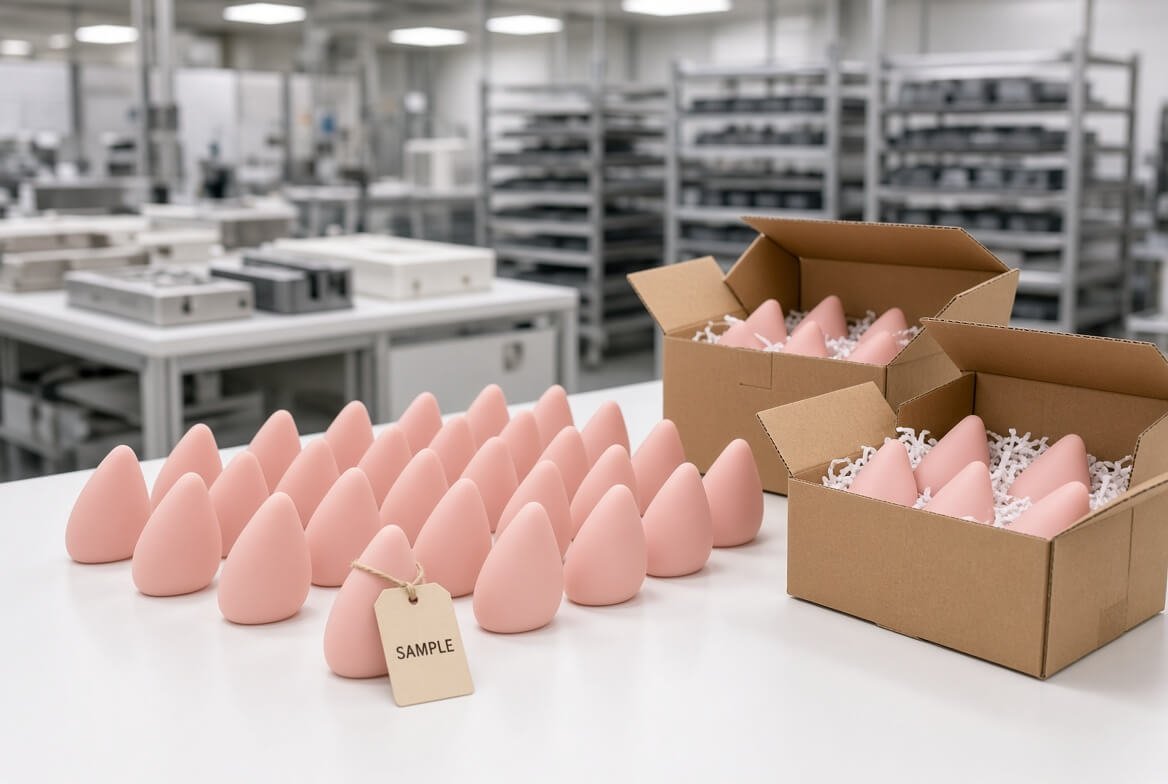
Bulk is a different room.
Now the product moves through mixed silicone lots, more hands, faster cycles, and a ship date. The question is no longer “can someone make one nice piece?” The question is “can the process repeat without you standing there?”
On a 30–50 piece trial, one bad unit is a headache.
On 500 pieces, the same miss is a listing problem, a refund problem, and a brand problem.
That is why bulk should copy a locked sample. It should not become a second design project under time pressure.
Causes of Differences Between Samples and Mass Production
When founders say “the factory changed my product,” the cause is usually one of three things. The size changed. The line changed. The material changed after they said yes.
The Pattern Grading Trap
Pattern grading is what happens when a design is scaled.
You approved a medium. Then you asked for a longer version, a thicker version, or “the same toy, just bigger.” On a screen, that looks simple. In silicone, the curve changes. The neck can go thin. A tall piece can sag. A base that looked fine on the small sample can look weak on the large one.
This trap is common in fantasy toys, tail plugs, and any set sold in several sizes. One approved sample does not cover the whole range.
If you need two sizes, approve two samples. If you need a size set, budget time for that. A cheap “just scale it” request is how a brand ends up with a bulk unit that no longer matches the photo.
Assembly Line Dynamics
The sample had a person who cared about every seam. Bulk has a clock.
On the line you may get:
- a different operator pouring or trimming
- a shorter cure so the order can leave this week
- less hand finishing
- a bag or card that is “almost the same”
Nobody has to cheat you for this to happen. The sample process and the bulk process were never written as one system. So the factory made what it always makes at volume: a fast version of something nearby.
Before you approve bulk, ask which steps stay the same. If the answer is “don’t worry, it will be like the sample,” you do not have a process yet. You have a hope.
Material Changes After Sample Approval
This one is quiet, and it hurts later.
The sample used one lot of liquid silicone. Bulk uses the next lot. Hardness moves a little. The color turns warmer. The surface feels tacky. A light scent shows up after a day in the bag.
Or the factory swaps a small part. A new suction cup. A thinner poly bag. A different ink. A new fur lot on a tail. You never got an email. You only see it when the carton arrives.
For a sexual wellness product, that is not a small styling issue. Your customer never visits the workshop. They only compare the unit in their hands with the photo they trusted.
If the material is not locked by grade, color code, and supplier, the sample you signed is only a memory.
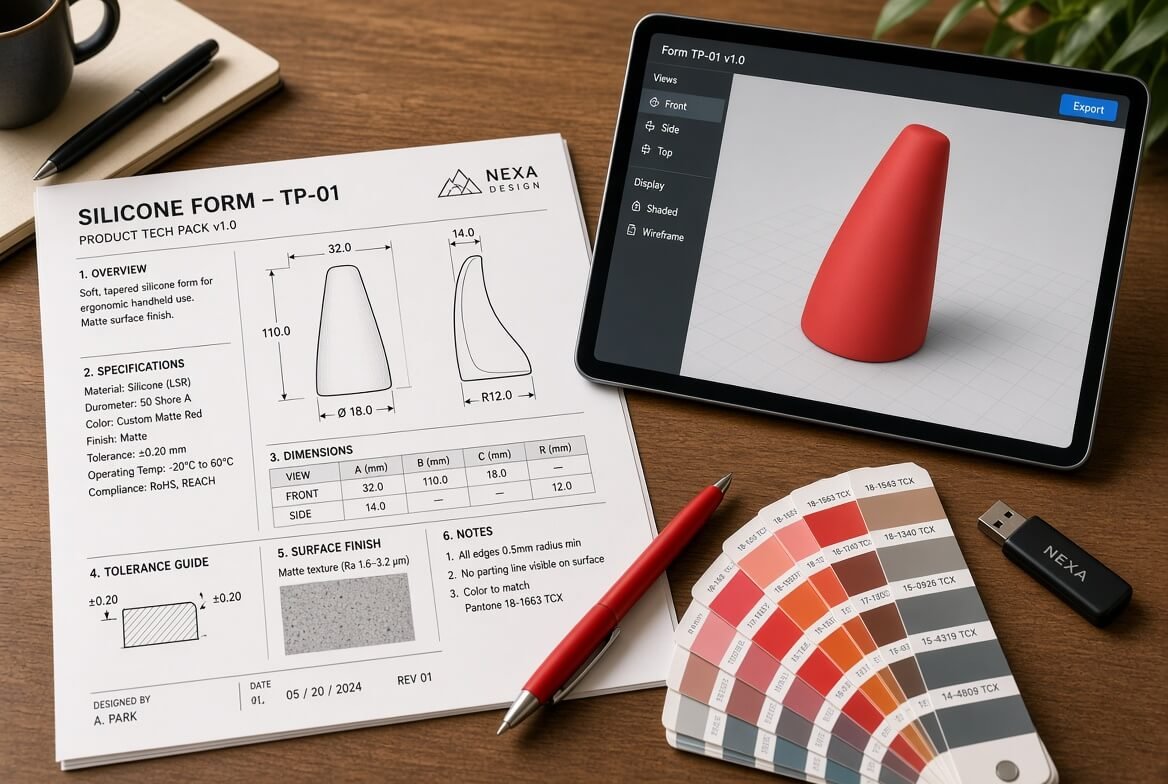
Ensuring Consistency Between Samples and Mass Production
You do not get a match by asking for one. You get a match by freezing the product, then checking the copy before the full run.
Quality Checks that Ensure Samples Match Final Products
Use the same checks on the sample and on bulk. If the checks change, the product will change.
Measure:
- length, max diameter, neck, and base
- weight
- firmness, with the same tool each time
- color next to the signed swatch
- surface: bubbles, seams, tears at the base
- function: suction, bend, whether it stands
- smell after it sits out
- bag, card, label, and logo placement
Do not check only the first nice piece off the line. Check early units, middle units, and late units. Drift likes to show up after the line speeds up.
Bridging the Gap: The Role of the Pre-Production Sample (PPS)
The first sample is the idea.
The pre-production sample is the warning system.
A PPS should be made with the bulk mold, the bulk silicone lot, the bulk process, and the bulk pack plan. If your factory jumps from a hand-finished prototype to 500 pieces, there is no bridge. You are paying to find problems after the money has left.
This is how a low-MOQ brand stays alive. You are not chasing a perfect object on week one. You freeze an 80% product that can be repeated. Then you improve the next run with real customer notes, not with guesswork.
Do not give a bulk go-ahead until the PPS matches the signed sample on the same checks.
The PPS Approval Checklist
Sit with the PPS and the signed sample in the same light. Then go down the list.
- Size sits inside the tolerance on the drawing.
- Firmness matches the unit you already approved.
- Color matches the swatch in daylight and indoor light.
- The surface has no extra flash, pinholes, or sticky film.
- Logo and packing match the artwork file.
- The material grade is written on the approval sheet.
- You keep one PPS as the gold sample.
- The factory keeps one PPS on the line.
- Photos and measurements are saved before you say yes.
- Every small change is written. “Close enough” is not a yes.
If one line fails, stop. A missed ship date is cheaper than a run you cannot sell.
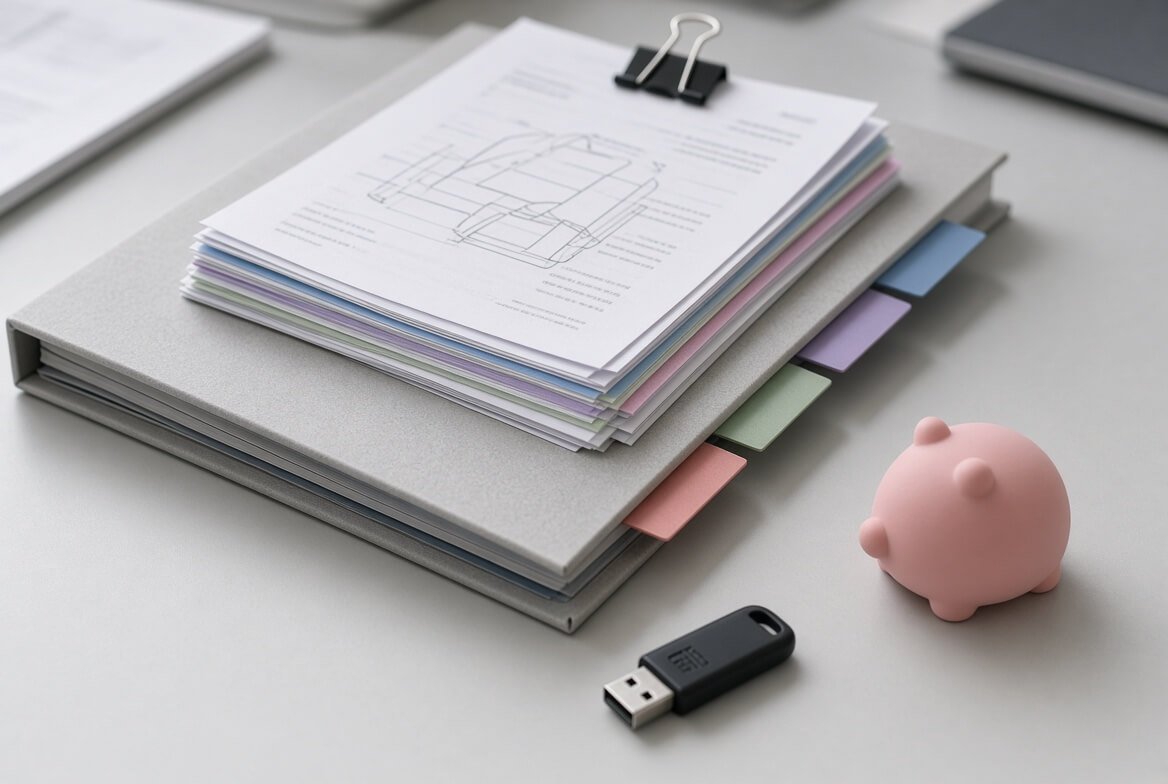
Tech Pack Evolution
A tech pack is the product’s memory. For an adult toy it should hold drawings, key sizes, silicone type, hardness, color, finish, logo rules, packing, photos of the approved sample, and the pass / fail range.
The pack has to grow. The first sketch is not the bulk spec. After PPS approval, update the pack so the line follows the PPS, not the early prototype you already outgrew.
If the only spec lives in a chat thread, the next operator will not see it. A new person on your team will not see it either. Then everyone will argue from memory when the goods look different.
Managing Costs and Timelines in Production
Founders compare quotes by unit price. That number hides the cost of a mismatch.
Calculating Your True Unit Cost
True cost includes the factory price, plus sample rounds, plus mold cost if you opened one, plus freight and duty, plus units you cannot list, plus the week you spend on rework emails, plus the rush fee if you must remake the run.
A cheaper quote that skips the PPS often becomes the expensive quote.
If you are still testing the idea, stay on a low-MOQ path. Make a small batch you can stand behind. Do not fill a spare room with product you are afraid to photograph.
Sourcing and Trim Management
The silicone body gets all the attention. The extras move more often.
Bags, cards, boxes, stickers, cups, hardware, fur, inserts. A new film looks shinier. A new board looks yellow. A new cup fails in use. A new fur lot sheds in the first photo.
Lock trims the same way you lock the main material: supplier, item code, photo, and a small spare lot. After sample approval, “use what is in stock” is how a clean product turns messy in the carton.
Partnering for Success
You should not have to become a factory manager to launch one product. You need a partner who treats sample match as part of the work.
End-to-End Manufacturing Excellence
End-to-end means one team owns design, sampling, PPS, bulk, packing, and shipment.
When the drawing lives in one place and the pour lives in another, the spec dies in the middle. A one-to-five person brand does not have the time to police that gap.
The safer path is short and visible:
- review the idea
- 3D design
- sample
- PPS
- small bulk
- then scale
That is how you go from a thought to a product without opening a mold too early.
Your Growth Partner
A useful partner does not say yes to every change.
They tell you when a bigger size will change the feel. They tell you when a new color will shift on the next silicone lot. They help you ship an 80% product, learn from buyers, and fix the next run.
That is the right pace for a new DTC or Shopify sexual wellness brand. You can move. You can also keep the first order inside a budget you can survive.
If the idea is already in your notes, ask for a product idea review and start the first product with a clear sample plan.
Mastering the Path to Scalable Production
Matching sample to bulk is not one meeting. It is a habit. Freeze the spec. Check the PPS. Inspect the run. Then make more.
Learn How to Scale from Prototype to Production While Eliminating Costly Mistakes
Work in this order.
First, learn what the user needs. Do not open a mold because the idea is exciting.
Second, make a low-cost sample and test the direction.
Third, keep the first order small so leftover stock cannot sink you.
Fourth, approve a PPS made the same way bulk will be made.
Fifth, run a short production with written checks.
Sixth, raise the quantity only after that run looks like the sample.
This is how a first brand avoids the expensive version of learning. The listing photo and the shipped unit stay in the same family.
When you are ready, go to iGoods and send the product you want to build.
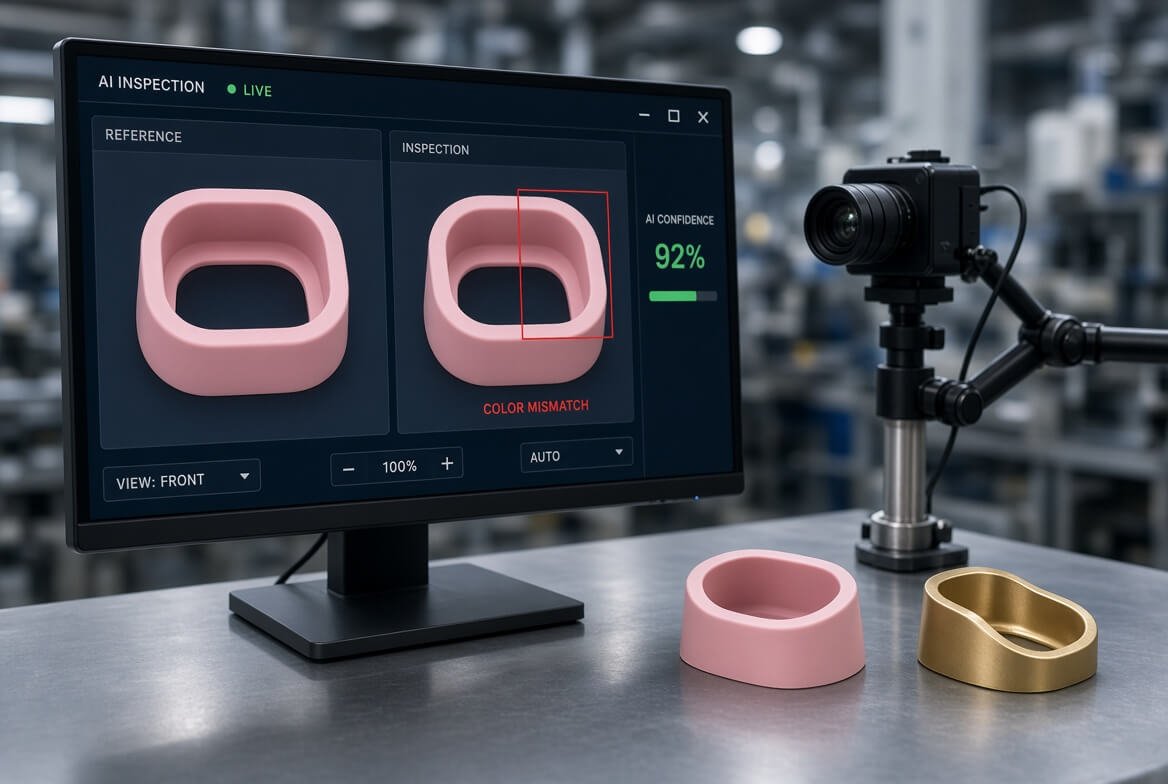
AI and Digital Technologies in Production Consistency
A camera and a spreadsheet will not replace a gold sample. They can catch drift before the carton is taped.
AI-driven Sample-to-Production Quality Verification
Some factories now compare bulk photos and measurements with the approved sample.
The system can flag a color shift, a missing trim, a warped shape, or a logo that moved. A person still decides. The tool simply checks more units than one tired pass at the end of the day.
For a small brand, that extra pass is the difference between catching ten bad pieces and shipping them.
Digital Twins for Pre-Production Sample Validation
A digital twin is a 3D model that behaves like the part before anyone pours silicone.
It can show a large size sagging, a neck going thin, or a tail twisting at the root. It will not replace a physical PPS. It can cut failed samples, which matters when every sample round costs time and freight.
Real-time Factory Monitoring to Prevent Sample Drift
Simple records already help: cure time, temperature, cavity number, material lot.
If bulk starts to drift, you can see when it started. You are not guessing after the goods sit in your hallway. Ask what the factory writes down during the run. If the answer is nothing, you will have no trail when the unit misses the sample.
FAQ
A:The sample was often made with extra care, at one size, with one material lot. Bulk uses more people, more speed, and sometimes a new lot or a new trim. If you also changed the size after the first sample, the shape itself has changed. Those gaps add up.
A:Keep a gold sample. Demand a PPS made with bulk methods. Write sizes, hardness, color, and packing in a tech pack. Inspect early, middle, and late units. Do not allow a silent material swap after you say yes.
A:Bulk units are checked against the gold sample and the PPS for size, weight, color, firmness, and packing. Lot records make a miss traceable. Without that, a factory cannot prove a match.
A:Use the same list both times: size, weight, firmness, color, surface, function, smell, and packing. Write the pass range before the run. A check with no number is only a feeling.
A:Put the grade, supplier, and color code on the approval sheet. Require a written note before any swap. If the lot changes, ask for a small confirmation sample before full bulk. Treat bags, cards, cups, and fur the same way as the silicone.