Introduction
Brief overview of the adult toy market growth
The adult toy industry continues to create opportunities for brands, wholesalers, ecommerce sellers, and content creators looking to build businesses around sexual wellness products. As more companies enter the market, simply offering another generic product is becoming less effective.
For B2B buyers, the challenge is no longer just finding products to sell. It is finding the right balance between launch speed, investment, product differentiation, and brand control.
Importance of a tailored approach to product branding
A product can be manufactured successfully and still fail to create a strong brand position if it does not match the target audience.
Some businesses need to launch quickly with a limited initial investment. Others need a distinctive product that can become a signature part of their brand.
This is why choosing between private label and custom adult toys should be based on your business model rather than simply choosing the option with the most customization.
Purpose of the article: guide readers in choosing between private label and custom design
This guide compares private label and custom adult toy manufacturing across cost, development time, customization, branding, manufacturing requirements, and long-term growth potential.
The goal is to help startups, wholesalers, creators, and established brands determine which approach makes the most sense for their current stage.
Understanding Private Label and Custom Adult Toys
What Are Private Label Adult Toys?
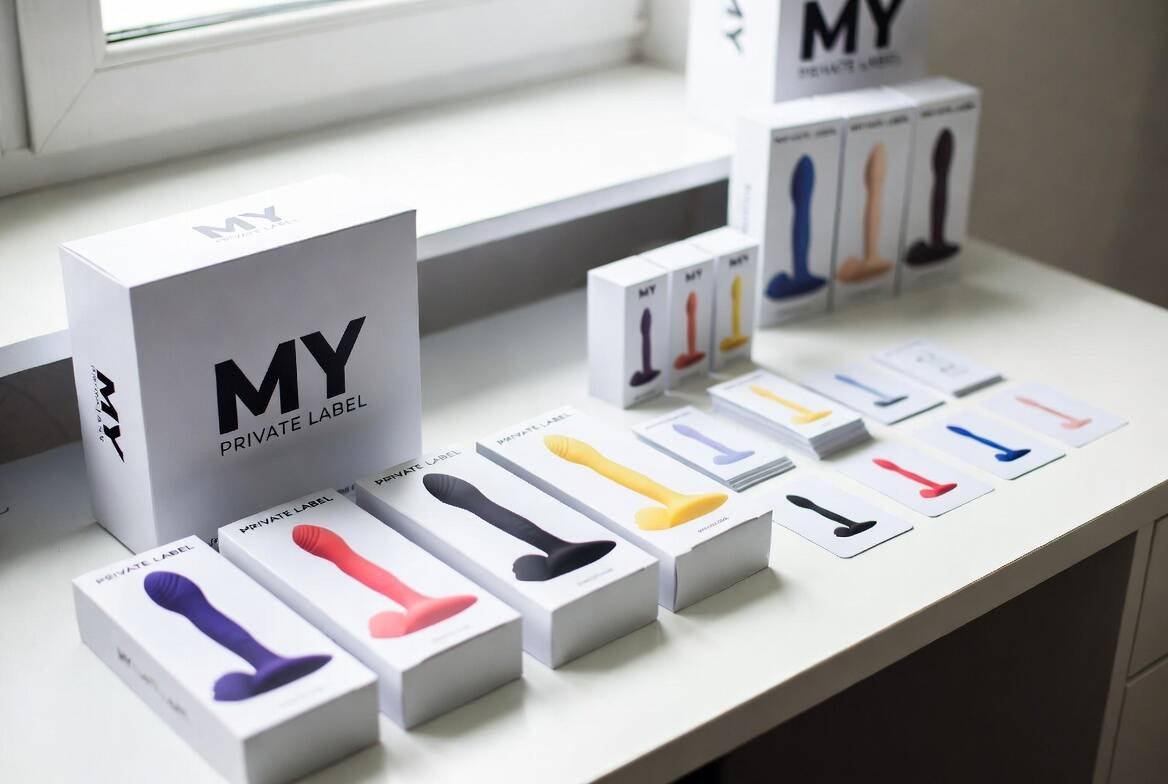
Private label adult toys are products that are already developed by a manufacturer and then offered under a buyer’s own brand.
Depending on the manufacturer, buyers may customize elements such as:
- Brand logo
- Product color
- Packaging
- Product sets
- Labels and inserts
- Certain product details
The process is generally faster because the core product, production process, and tooling already exist.
Advantages: faster to market, cost-effective, lower risk
Private label is attractive for businesses that want to test a category without investing heavily in new product development.
Because the underlying product already exists, brands can focus their resources on branding, packaging, marketing, distribution, and customer acquisition.
It can also reduce the risk of investing in a completely new product before there is evidence of market demand.
Common use cases
Private label is commonly used by:
- New adult toy brands
- Ecommerce sellers
- Wholesalers and distributors
- Sexual wellness startups
- Content creators launching merchandise
- Existing brands expanding their product range
For example, a creator with an established audience may start with a private label product before investing in a completely custom product. This allows them to test whether their audience is interested in purchasing branded products.
What Are Custom Adult Toys?
Custom adult toys are developed around a brand’s specific product concept or requirements rather than relying entirely on an existing product design.
Depending on the project, customization can involve:
- Product shape and dimensions
- Surface texture
- Material
- Color
- Functional features
- Product structure
- Packaging
- Branding
A custom development project may involve 3D design, prototyping, mold development, sample testing, and mass production.
Advantages: unique design, higher brand differentiation, long-term potential
The biggest advantage of custom manufacturing is control.
A brand can develop a product around a specific market opportunity instead of selecting from an existing catalog. This can make it easier to create a signature product that is strongly associated with the brand.
Custom products may also provide greater opportunities for differentiation in competitive categories.
Common use cases
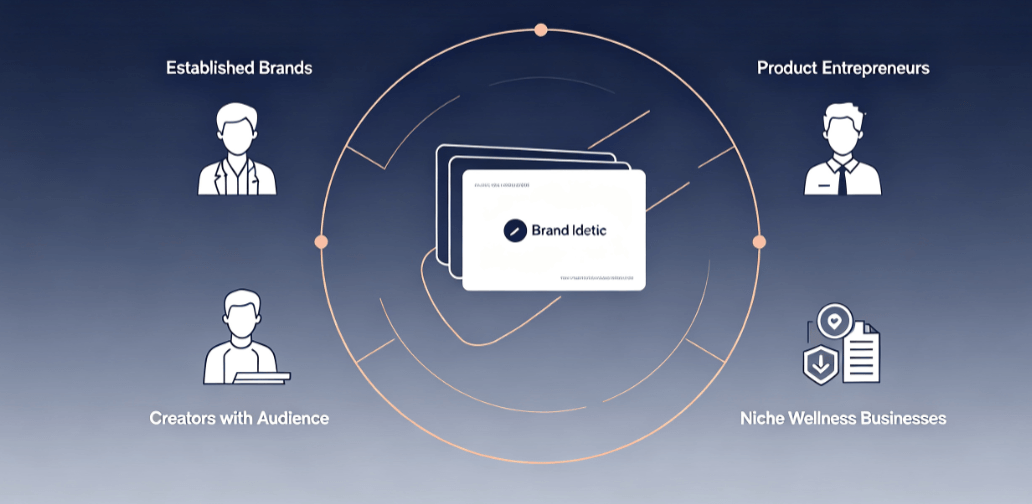
Custom adult toys are often suitable for:
Companies developing proprietary product concepts
Established adult toy brands
Product entrepreneurs
Brands with proven demand
Creators with strong audience recognition
Niche sexual wellness businesses
Key Differences Between Private Label and Custom Adult Toys
The main differences can be summarized in four areas.
Design and customization levels
Private label usually starts with an existing product, while custom development allows the product itself to be modified or created according to the brand’s requirements.
Time to market
Private label is generally faster because the core product has already been developed. Custom products require additional development and sampling before production.
Cost implications
Private label normally requires less upfront investment. Custom products may require additional costs for design, prototyping, mold development, and testing.
Branding flexibility
Both models can support branding and custom packaging. However, custom development provides much greater control over the actual product.
Pros and Cons: Private Label vs Custom Adult Toys
Private Label: Pros and Cons
Pros: affordability, quick setup, established product performance
Private label can provide a practical starting point for businesses that want to enter the market without taking on the full cost of product development.
The main advantages include:
- Lower initial development investment
- Faster product launch
- Easier product testing
- Existing production experience
- Flexible options for branding and packaging
It is particularly useful when a business wants to validate demand before committing to a larger development project.
Cons: limited uniqueness, dependency on suppliers
The main limitation is product differentiation.
Because the core product is based on an existing design, other brands may offer similar products. The brand therefore needs to create differentiation through positioning, packaging, product combinations, pricing, marketing, and customer experience.
There may also be greater dependence on the manufacturer’s existing designs and production capabilities.
Custom Adult Toys: Pros and Cons
Pros: exclusivity, brand loyalty, high margins
Custom products can provide a stronger foundation for differentiation.
A unique product can become a recognizable part of a brand’s product portfolio and potentially support premium positioning. When customers associate a particular product concept with one brand, it can also contribute to stronger brand recognition.
Custom products may provide greater margin opportunities, although actual profitability depends on development costs, MOQ, production volume, pricing, and market demand.
Cons: higher costs, longer production timelines, manufacturing complexity
Custom development requires more planning and coordination.
Brands may need to consider:
- Product design costs
- Prototyping
- Mold development
- Sample revisions
- Material selection
- Testing
- Production setup
The development process can therefore take longer than private label production.
Factors to Consider When Choosing Between Private Label and Custom
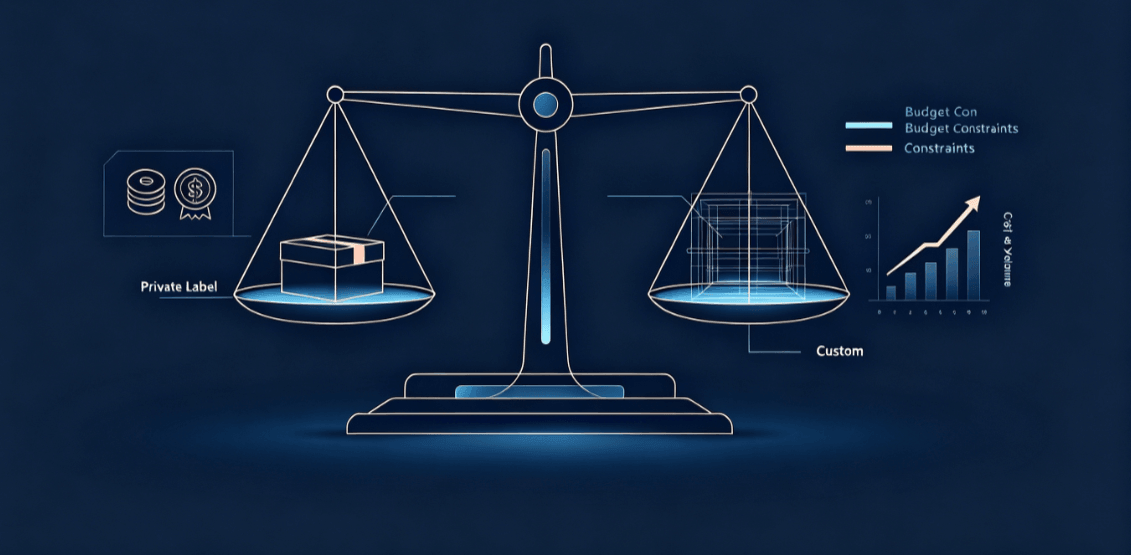
Budget Constraints
What to expect in terms of upfront costs
Private label usually has a lower initial barrier because the core product has already been developed.
Custom products can require additional investment before the first commercial order, particularly when a new mold or product structure is required.
For a startup with limited capital, private label can therefore be a practical way to enter the market while preserving cash for marketing, inventory, packaging, and customer acquisition.
Ongoing costs and scale implications
The initial investment is only one part of the calculation.
As order volume increases, brands should also consider unit costs, tooling amortization, inventory requirements, packaging costs, and logistics.
A custom product may require more investment at the beginning but can become more attractive when a brand has enough demand to support larger production volumes.
Branding Goals
How each option aligns with your brand vision
Private label works well when the brand’s differentiation comes primarily from its visual identity, positioning, audience, and marketing.
Custom manufacturing becomes more attractive when the product itself is central to the brand’s identity.
For example, a brand that wants to be known for a specific product concept may benefit from developing a product that cannot simply be found in another supplier’s catalog.
Levels of differentiation possible with private label vs custom products
Private label can still offer meaningful differentiation through custom colors, packaging, product combinations, and brand presentation.
However, custom products provide a deeper level of differentiation because the underlying product can be developed around the brand’s specific requirements.
Target Audience Insights
Understanding customer needs and preferences
Before choosing a manufacturing model, brands should understand what their customers actually value.
Consider:
- Product functionality
- Design preferences
- Price expectations
- Material preferences
- Product size
- Niche requirements
- Packaging expectations
Market research and customer feedback can help determine whether a new product concept is strong enough to justify custom development.
When to choose niche customization for targeted demographics
Custom products can be particularly useful when serving a clearly defined niche.
For example, a brand may identify an underserved audience with specific preferences that are not adequately addressed by existing products.
Content creators can also use this approach to develop products around their audience and personal brand. If this is your target market, you can explore more about opportunities for adult content creators and KOLs through our dedicated guide. Adult Content Creators & KOL Product Opportunities
Manufacturing and Supply Chain Needs
Partnering with OEM/ODM manufacturers
The right manufacturing partner can support different levels of product development.
ODM is often associated with existing manufacturer designs that can be branded or modified, while OEM generally involves manufacturing according to the buyer’s own specifications. In practice, manufacturers may offer several levels of customization between these two models.
For buyers, the important question is how much control they need over the product and how much development work they are prepared to undertake.

Evaluating supplier reliability and quality
Before placing an order, evaluate more than product pricing.
Important factors include:
- Sample quality
- Manufacturing experience
- Quality control procedures
- Communication
- Production capacity
- MOQ flexibility
- Lead times
- Packaging capabilities
- After-sales support
A supplier that can clearly explain its development and quality-control process can reduce unnecessary problems during production.
Compliance considerations for materials
Material selection should be considered alongside the requirements of the target market.
Common adult toy materials include platinum silicone, medical-grade silicone, ABS, TPE, and PVC, depending on the product.
Brands should also discuss applicable testing and compliance requirements with their manufacturing partner. Depending on the destination market and product, requirements may involve standards or regulations related to areas such as CE, RoHS, and applicable FDA requirements.
Private Label vs Custom: Manufacturing Considerations
Navigating OEM and ODM Options
Key differences between OEM and ODM in adult toy manufacturing
OEM and ODM are two common manufacturing approaches, but they provide different levels of control.
With OEM, the brand generally provides the product specifications or design and the manufacturer produces according to those requirements.
With ODM, the manufacturer provides an existing design that the brand can select, brand, or modify depending on the available options.
This means ODM can reduce development time and upfront R&D requirements, while OEM can provide greater control over product design.
Choosing the right model for your brand
A simple way to think about the decision is:
- Need to launch quickly? Consider private label or ODM.
- Testing your first product? Start with an existing product and validate demand.
- Already have a proven product concept? Consider custom development.
- Need strong product differentiation? OEM or deeper customization may be more appropriate.
- Want to balance speed and differentiation? Explore a staged approach that begins with private label and moves toward custom development.
This approach allows brands to match manufacturing investment with their current level of market validation.
Material Selection and Safety Standards
Overview of medical-grade silicone, ABS, and other materials
Different materials can influence the product’s feel, durability, appearance, flexibility, production method, and cost.
For example, silicone is commonly selected for products where a soft-touch or flexible feel is important, while ABS is frequently used for rigid components and certain electronic product structures.
The right material should be selected according to the product’s intended use, design requirements, manufacturing process, and target market.
Ensuring safety compliance: CE, RoHS, FDA certifications
Compliance should be considered during product development rather than after production.
Brands should work with their manufacturing partners to identify which testing, documentation, labeling, and regulatory requirements apply to the target market.
It is also important to distinguish between a manufacturer’s available compliance documentation and the specific requirements that apply to an individual product and market.
🆕 2026 Trends in Private Label and Custom Adult Toys
Eco-Conscious Adult Toys
Increasing demand for sustainable materials
Sustainability continues to influence purchasing decisions across consumer product categories.
For adult toy brands, this can include greater attention to product durability, packaging reduction, responsible material selection, and transparent communication about product materials.
How to incorporate eco-friendly practices into private label and custom designs
Private label brands can begin by selecting more responsible packaging and reducing unnecessary packaging components.
Custom brands have more opportunities to consider sustainability during the design stage, including product longevity, packaging structure, and material choices.
AI-Enhanced Personalization
Leveraging AI for custom pleasure product design
AI can support early-stage product development by helping brands analyze customer feedback, identify patterns in market research, generate product concepts, and explore different design directions.
It should be treated as a development tool rather than a replacement for engineering, prototyping, safety testing, or manufacturing expertise.
Future of AI in creating tailored user experiences
As AI becomes more integrated into consumer products and digital experiences, adult brands may explore more personalized product recommendations, digital interfaces, and connected experiences.
For manufacturers, this could create additional opportunities for collaboration between product design, electronics, software, and consumer data.
Inclusive Product Lines
Addressing diverse gender identities through inclusive private label options
Inclusive product development can help brands serve audiences whose needs are not well represented by traditional product categories.
Private label provides a relatively accessible way to expand into different product segments without developing every product from scratch.
Custom products for underrepresented audiences
Custom development can go further when existing products do not adequately address a specific audience.
A clearly defined niche can provide a strong starting point for product development because the brand can build the product around specific customer requirements rather than trying to appeal to everyone.
Subscription Box Opportunities
Creating private label or custom products specifically for sexual wellness subscription boxes
Subscription box businesses need products that fit their target audience, pricing model, packaging requirements, and recurring delivery schedule.
Private label products can help subscription companies maintain a flexible product selection, while custom products can provide exclusive items that strengthen the perceived value of the subscription.
Gaining long-term customers through curated experiences
The product itself is only part of the subscription experience.
Consistent packaging, product education, themed collections, and carefully selected product combinations can help create a more recognizable brand experience and encourage repeat subscriptions.
Steps to Launch Your Brand: Private Label vs Custom
Step 1: Conduct Market Research
Identifying your niche market and competition
Start by understanding who you want to serve and what competing brands already offer.
Look at product categories, pricing, customer reviews, positioning, packaging, and product gaps.
The objective is to identify an opportunity where your brand can provide a clear reason for customers to choose you.
Leveraging trends and data insights
Use search data, marketplace information, social media discussions, customer feedback, and competitor research to identify potential opportunities.
The more evidence you have before selecting a product, the easier it becomes to decide whether private label or custom development makes sense.
Step 2: Partner with the Right Manufacturer
Finding a trusted private label or custom toy manufacturer
Look for a manufacturer that can support your current needs while also giving you room to scale.
If you are starting with private label, check the available product range, customization options, MOQ, samples, and packaging services.
If you plan to develop a custom product, confirm that the manufacturer can support design, prototyping, mold development, production, and quality control.
Questions to ask and red flags to avoid
Before working with a manufacturer, ask:
- What is the MOQ?
- How long does sampling take?
- What customization options are available?
- Can you support mold development?
- What materials can you provide?
- How is quality controlled?
- What documentation is available?
- What are the bulk production lead times?
Be cautious if a supplier cannot clearly explain these points or repeatedly changes information about pricing, production, or customization.

Step 3: Prototype and Test
Importance of prototyping and customer feedback
A physical sample allows brands to evaluate the product before committing to a larger order.
For private label, sampling is mainly about confirming quality, specifications, appearance, and packaging.
For custom products, prototyping also helps identify design issues and refine the product before mold production and mass manufacturing.
Customer feedback can then help determine whether the product is ready for launch or requires further adjustment.
Testing for safety and quality assurance
Quality assurance should cover both materials and finished products.
Depending on the product, testing may include material verification, dimensional checks, functionality testing, appearance inspection, and final product inspection.
A reliable manufacturing process should include quality checks before products reach the customer.
Step 4: Develop Packaging and Branding
Custom packaging vs standard label options
Packaging can be one of the easiest ways for a private label brand to create a distinctive identity.
Standard packaging may help reduce costs and simplify the launch process, while custom packaging provides greater control over colors, graphics, product information, and overall brand presentation.
Crafting a memorable unboxing experience
A well-designed package should communicate the brand before the customer even opens the product.
Consider how the product, box, inserts, instructions, photography, and visual identity work together.
For creator-led brands, packaging can also reinforce the connection between the creator’s personal identity and the product.
Step 5: Launch and Scale
Marketing your unique or private label brand
Your marketing strategy should reflect the product development model you chose.
Private label brands should focus on differentiation through brand positioning, packaging, product bundles, customer experience, and targeted marketing.
Custom brands can place greater emphasis on the unique product concept, proprietary features, design story, or specific audience need the product addresses.
In both cases, the goal is to communicate why customers should choose your brand rather than simply promoting another adult toy.
SEO and digital marketing strategies tailored to the adult industry
SEO can help B2B adult brands attract buyers at different stages of the purchasing journey.
Commercial-intent keywords such as private label adult toys, custom adult toys, adult toy manufacturer, adult toy wholesale, and OEM adult toys can target buyers who are actively researching suppliers or manufacturing options.
Educational content can support earlier-stage research, while product pages, manufacturing service pages, and contact pages should capture visitors who are ready to evaluate a supplier.
A strong strategy combines SEO, content marketing, product pages, social media, email marketing, and direct outreach rather than relying on a single traffic source.
FAQ
A:Private label is usually better for new brands because it offers faster launch times, lower upfront costs, and less development risk.
A:Custom adult toys usually cost more because they may require design, prototyping, mold development, and testing.
A:Yes. Small businesses can start with one focused custom product instead of developing an entire product line.
A:Private label allows brands to customize logos, packaging, colors, and product presentation without developing a product from scratch.
A:Choose based on your budget, customization needs, launch timeline, and product goals. Private label suits faster launches, while custom production offers greater product differentiation.